
Trudging along in the cold autumn air, I noticed a sprawling construction site opposite the Weeksville Heritage Center. Initially I thought it was going to be a commercialised property when looking at the modern exterior, but checking it now reveals that it’s a health and rehabilitation center. Along the way, there were multiple delis, and the occasional Chinese hole-in-the-wall spot, but gradually, I reached the border of Crown Heights that leads into Brownsville.
As I walked by the Lincoln Terrace Park, I looked inside but it was probably too cold for most people to venture outside (about 5°C). At the time I didn’t know much about this park, just that gun violence does occur fairly frequently at night here (even in 2020). After reading up about it now, it used to be a crime hotspot, as it is located at the intersection of four police precincts. Therefore, petty thieves could run into another precinct’s boundaries, which hinders the effort to catch them due to radio divisions among the precincts.
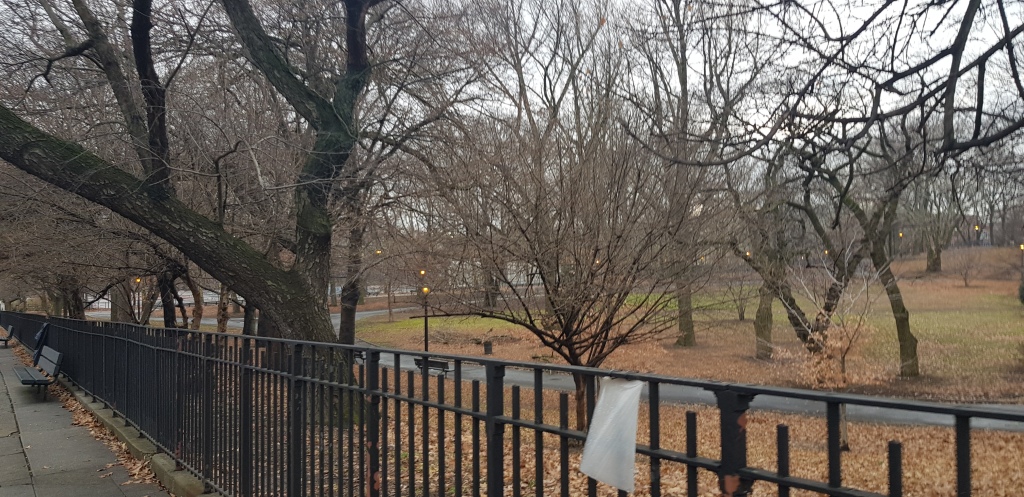
Eventually, I reached East New York Avenue and took a moment to survey the area. It was generally quiet, with few pedestrians around the area.
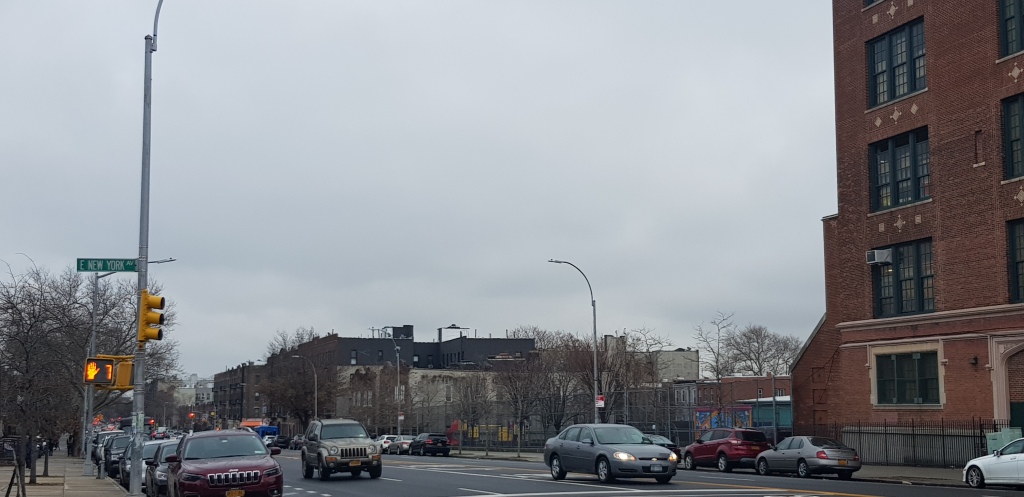
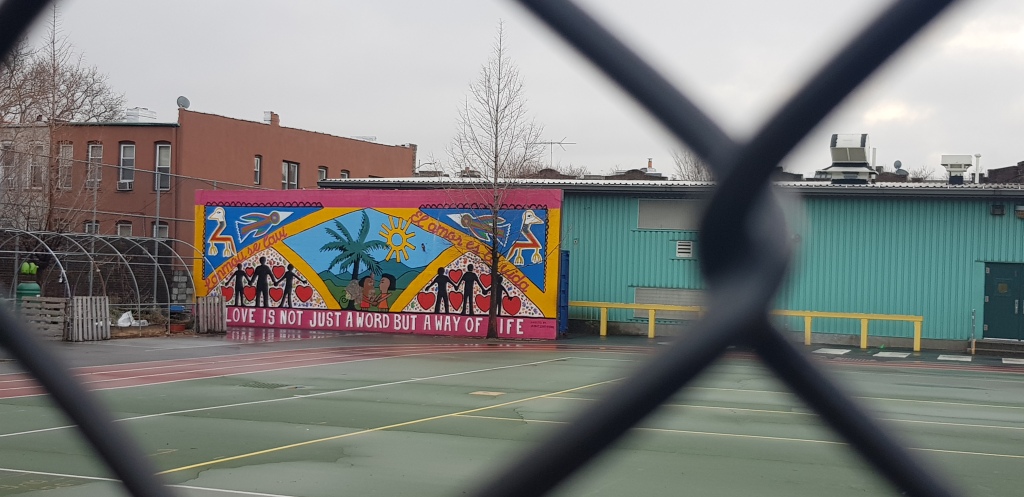
Walking along Rockaway Parkway, I noticed a mural on the opposite side of the street, at what appeared to be an elementary school. While crossing the street to the other side, there was a mother walking with her son side-by-side – she seemed slightly alarmed at first that I had suddenly crossed the street but her worries dissipated after I smiled and greeted her good morning. She smiled back but didn’t say anything and went on her way, with her son looking back curiously at what I was doing.
I tried my best to align my phone’s camera along the wired fence and snapped a quick photo – didn’t want to look too suspicious, even though there was hardly anyone around.
I decided that instead of wandering around, I needed a proper base to plan on which murals I wanted to see in the area. Therefore, heading back to Blendzville Cafe seemed like the obvious choice, where I could grab a smoothie while also taking the time to plan which spots to hit up.
After entering the cafe, this time there was another table of kids and teens who seemed to be working on some sort of art project. Pascal, the owner, recognised me immediately, and said, ‘You’re back!’, with a hint of surprise in his voice. I was a little surprised since it had been at least a month since my last visit. I guess he doesn’t get that many Asian customers, since only about 1% of people who live in Brownsville identified as Asian.
I had another look at the smoothie selection, but again, I had to go with the Parkway Potion smoothie, which consists of strawberry, banana, passion fruit and mango.
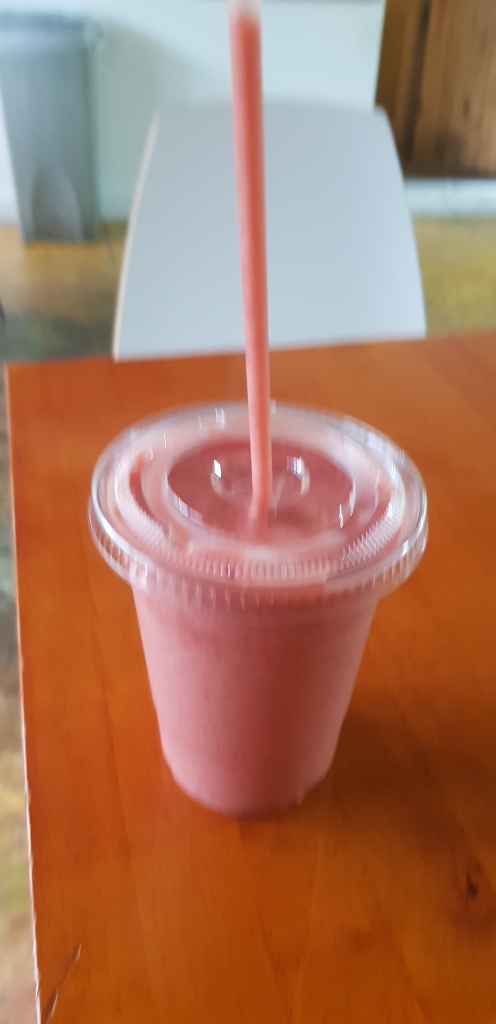
While sipping on the smoothie, I committed to memory the spots I wanted to visit, and decided to head back out after thanking Pascal. On hindsight, it must have been a weird sight for most of Brownsville’s denizens to see an Asian guy walking around with a bright pink smoothie walking around in their hood haha.
I decided to stick to Pitkin Avenue throughout most of my walk – this was the main artery of shopping streets that stretched across Brownsville. An article from TIME magazine titled ‘Brownsville: Inside One of Brooklyn’s Most Dangerous Neighbourhoods‘ in 2012 wrote about how a community leader who ran a recreation center, pretty much told the photographers that it would be insane to walk around on their own.
However, after my first visit to the neighbourhood the previous month, along with continually declining crime rates in this area (at the time), and considerable research into the existing crime trends in the area, Pitkin Avenue felt safe enough for me, especially in the day.
One of the first notable buildings I encountered stood out noticeably from all the rest. At the time, it was already in the late afternoon on a school day, and school children were bursting out from the gates of the building, so I refrained from taking photos in case of any potential misunderstandings.

Photo Credit: https://www.brownstoner.com/architecture/brooklyn-architecture1501-pitkin-avenue-loews-theatre-brownsville/
This building was formerly known as Loew’s Pitkin Avenue Theater and was constructed in an era where movie palaces were the prime choices for escapism, in 1929. At the time, Brownsville was still a Jewish majority neighbourhood and was even nicknamed ‘Little Jerusalem’ or the ‘Jerusalem of America’, and was considered a lower-middle class neighbourhood.
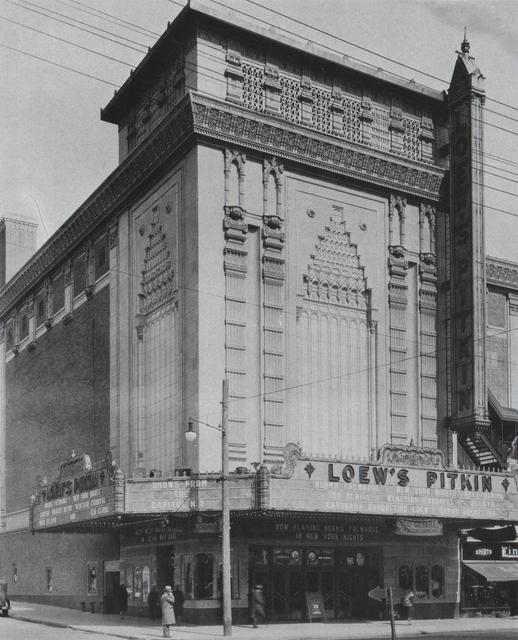
Photo Credit: http://cinematreasures.org/theaters/3887
However, the gears of demographic changes had already been set in motion, and African Americans & Latino Americans were starting to move into Brownsville, and occupied the poorest quality of housing available at the time. Most of these African American residents wanted to escape the Jim Crow laws that were prevalent in the South, and by the 1950s, the ethnic make-up of African Americans in Brownsville doubled from 6% in the 1940s to 12% in the 1950s. However, there were not enough jobs as factories in the area started closing down, bringing economic hardship to many of newly arrived African American Brownsville residents. The final straw for most Jewish Americans was when the New York City Housing Authority decided to build more public housing projects in the area, and there was a mass exodus of Jews out of Brownsville, citing rising crime as the major motive for moving out.
With the Brownsville neighbourhood’s shift in demographics and economic fortunes, so did that of Loew’s Pitkin Avenue Theater, which gradually closed in 1971. Even though its interior deteriorated quickly, its exterior remained mostly intact across the ravages of time.
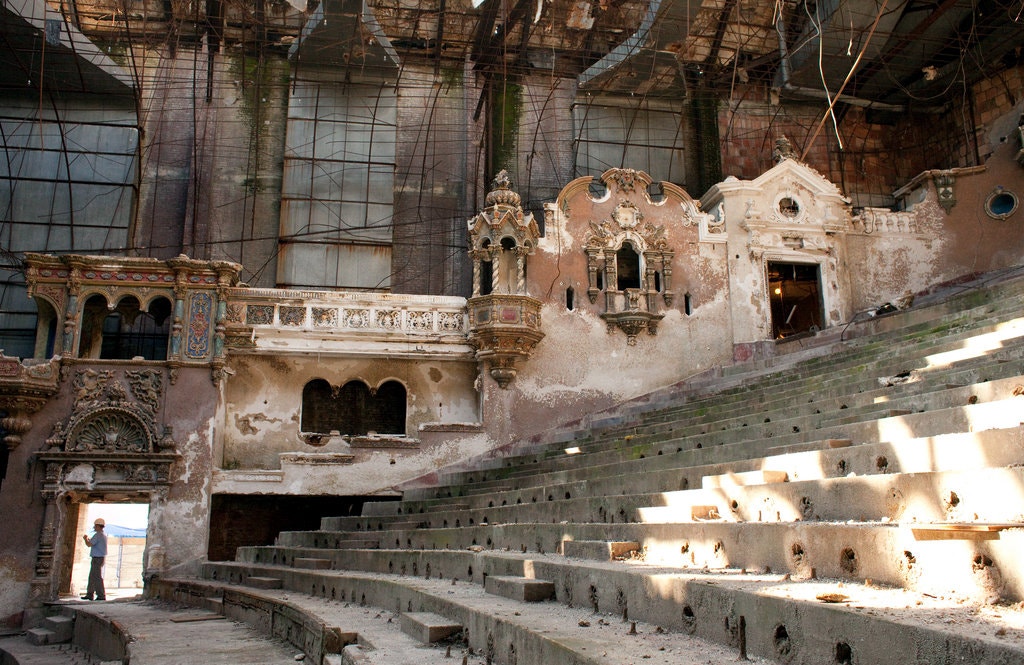
Photo Credit: https://www.nytimes.com/2010/09/29/realestate/29theater.html
Apparently it was re-developed into a mixed use retail and charter school space, but when I walked by, I didn’t see any retail stores on the first floor and only saw the Brownsville Ascend Charter School logo behind the gates.
I deftly weaved through the suddenly bustling sea of students and continued along Pitkin Avenue. One of the first murals I spotted was this one.
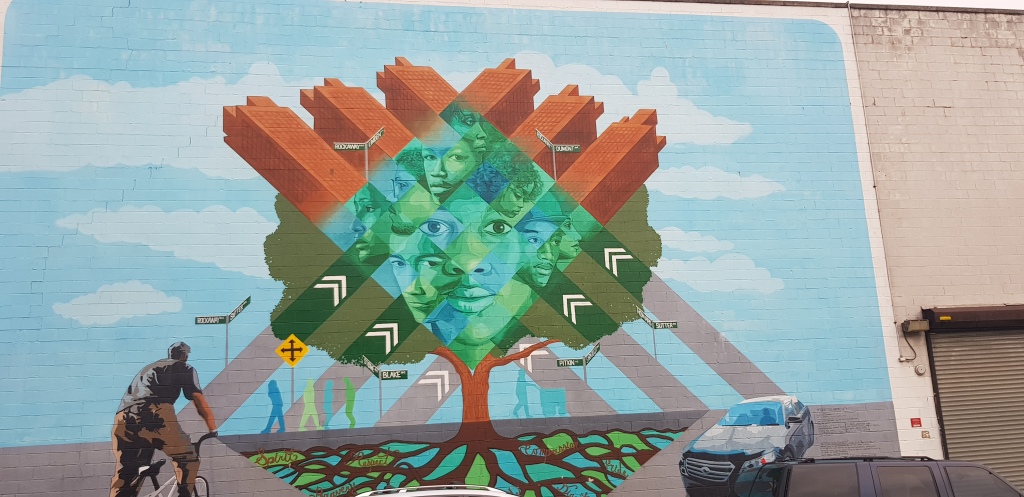
The following excerpt is taken from Groundswell’s website about this mural:
Intersections Humanized was created by a group of teen artists participating in Groundswells Summer Leadership Institute, including some with a history of court-involvement. These young people collaborated with artists Chris Soria and Don Christian Jones and community partners the NYC DOT, Pitkin Avenue BID, and the Brownsville Community Justice Center to create a vision of shared streets in Brownsville and support the economic revitalization of historic Pitkin Avenue.
In the mural, a central constellation of individual portraits overlooks historic Pitkin Avenue. Together, these individual portraits highlight the strength and diversity present in Brownsville, while creating a positive shared identity for the neighborhoods 116,000 residents. The image is a powerful reminder of the critical role each of us has to play in transforming our community and promoting the livability of our streets. Text along the bottom reads Respect, Pride, Fortitude, and Compassion.
The unveiling of this mural is particularly meaningful as the City of New York announces a major grant from the National Endowment for the Arts (NEA), awarded to Groundswell to support the presentation of a transformative mural project in Brownsville entitled Transform/Restore: Brownsville. This participatory public art project will engage high-risk young adults, local businesses, and community members in creating visible and permanent change in one of New York City’s most challenged neighborhoods.
I would have liked to get a full photo of it, but there was a vehicle blocking the bottom portion of the mural. Ah well..
Continuing along Pitkin Avenue, I spotted what I initially thought was a catchy slogan atop a KFC, and somehow thought KFC had put it up at first.

After reading about it later on, Brownsville In, Violence Out (BIVO) turns out to be an anti-gun violence initiative by CAMBA. One crucial part of the program is they have Violence Interrupters (VI) from Brownsville who were previously affected or involved in gun violence, to try and reduce the incidence rate of gun violence. Previously, I read about a similar approach being done in Hempstead, Long Island in ‘The Triangle: A Year on the Ground with New York’s Bloods and Crips’, in which a church-led group tried to perform the same role of reducing shoot-outs among the two warring gangs.
Moving further along Pitkin Avenue, I soon arrived at Mother Gaston Boulevard, which had previously been termed as New York’s Belly of the Beast by Al Jazeera. What’s significant about this street is that it is a notorious boundary that divides gang territories in the area, and there have been way too many innocent victims because of bullets that were meant for others. Beyond this spot to the east, there was only more housing projects, auto repair shops and East New York in the distance.
It is at this notorious intersection where one of the most inspirational murals can be found.

The following excerpt about the Moving Forward mural is from Groundswell’s website:
Created by 17 young adult artists and 2 professional artists, this mural helps to create an inviting gateway at the entryway to this historic Brooklyn neighborhood. The text-based image captures the cross-sector dynamism present within the neighborhood and reads Brownsville Moving Forward. Important community figures are highlighted throughout the mural, including renowned activist and educator Rosetta Mother Gaston, who founded local hidden treasure Heritage House, housed on the second floor of the Stone Avenue Branch of the Brooklyn Public Library.
I had previously made plans to visit the Heritage House here on a Saturday morning some time back. I believe it was around the Thanksgiving weekend, which was brutally cold that year, so I decided to give it a miss in the end – regretting it now.
Looming in the distance a few blocks away were one of Brownsville’s eighteen housing projects. As mentioned in previous posts, Brownsville has the highest concentration of public housing in the whole of America, and many of these housing projects are still crime-infested till this day. In a recent article in October 2020 by NY Daily News, the Howard Houses along Mother Gaston Boulevard, which are mere steps away from where I took these photos, have been one of the deadliest homicide sites throughout the city. Moreover, New York City Housing Authority (NYCHA) residents have bore the brunt of worsening gun violence problem in the city – there were 67 reported shootings per 100,000 NYCHA residents, compared to 12 reported shootings per 100,000 non-NYCHA residents in the rest of the city.

On the way here, I missed out a few mural spots, so I decided to head back the same way I came to check out these spots.
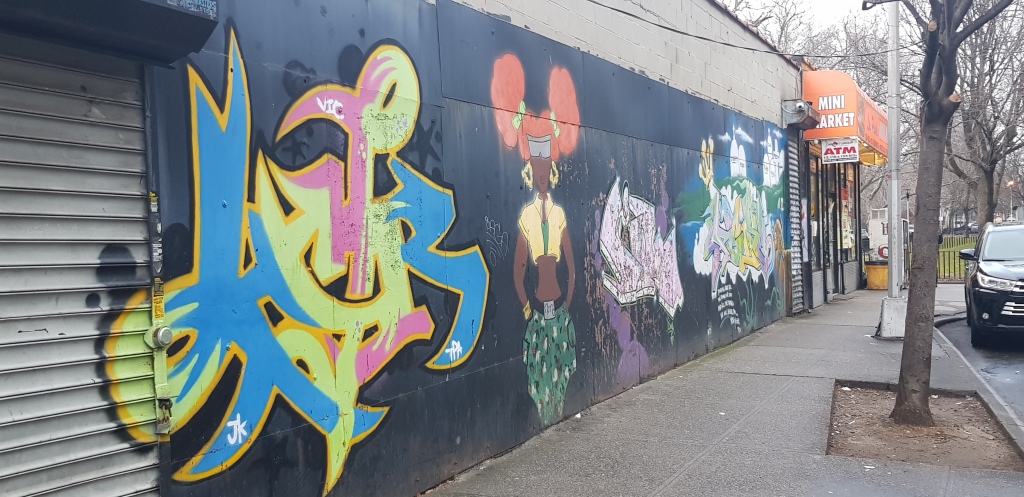

For the subsequent mural, I did not know its exact location, only that it was somewhere along Pitkin Avenue. Luckily, I spotted it on my way back when I had missed it the first time, along the intersection of Pitkin Avenue and Herzl Street.
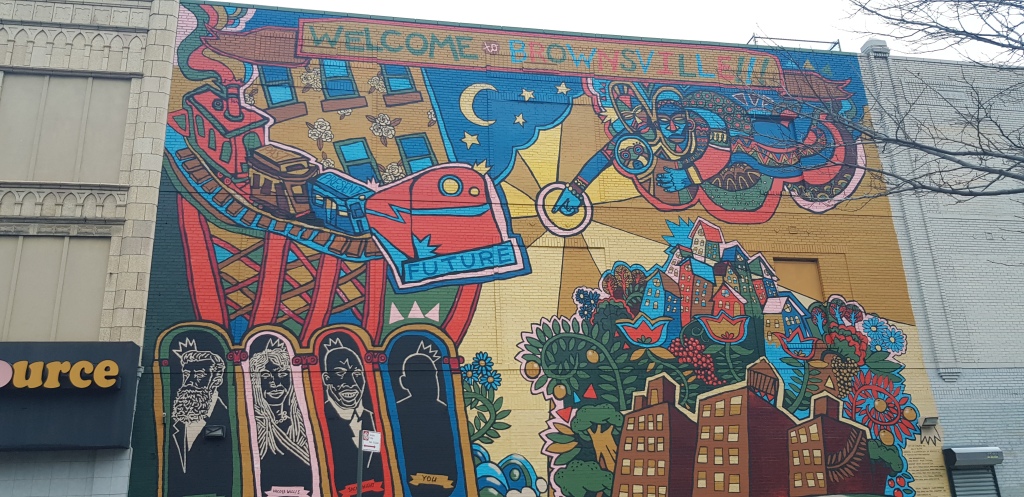
The excerpt from Groundswell’s website is as follows:
Installed on Herzl Street, It’s Not A Dream If You Will It is inspired by Theodore Herzl’s famous quote If you will it, it is no dream. and encourages psychological transformation within the participants and the viewers. As the third mural to be unveiled among a series of five created through Transform / Restore: Brownsville, It’s Not A Dream If You Will It supports the transformation of the narrative of Brownsville through public art. Throughout the mural design and fabrication process, youth participants engaged in brainstorming sessions to re-define the concept of hero and role model.
During the research phase, the project team also visited the Brooklyn Museum and Brownsville Heritage House. We dug through the history of Brownsville, aiming to figure out a path for our community in the future. What is the best way to achieve that other than getting to know our neighborhood first? said youth participant Sean Turner, among five other Brownsville residents on the team. At the bottom left of the mural, a silhouette is nestled among Brownsville-born community leaders and celebrities, suggesting that everyone can become a neighborhood hero through this process of acknowledgment and discovery.
The water image at the bottom of the mural further suggests transformation through upward and continuous progress, inspired by Greek philosopher Heraclitus notion No man ever steps in the same river twice, for its not the same river and he’s not the same man. Launched with funding from the National Endowment for the Arts (NEA) through its national Our Town initiative, Transform / Restore: Brownsville is designed to engage young adult probation clients, local businesses, and community members in the creation of visible and permanent change in Brownsville, Brooklyn.
I really wanted to get a good photo of this mural and was trying to angle my shots, but to no avail. Some passers-by noticed me taking photos of the mural, but didn’t pay me much attention beyond some curious looks.
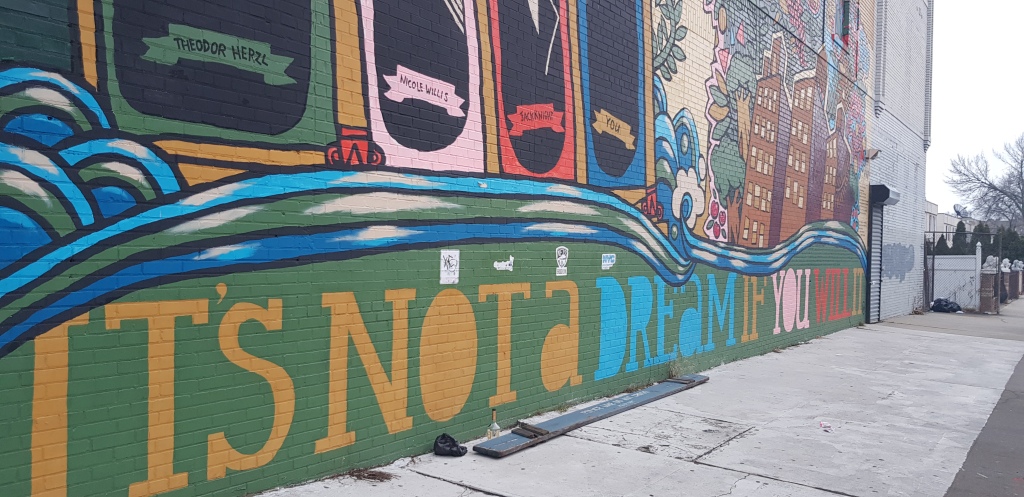

I also feebly tried to take a video of the entire mural. I took my time to examine each element in this particular mural, and hope it has done some good in inspiring the community.
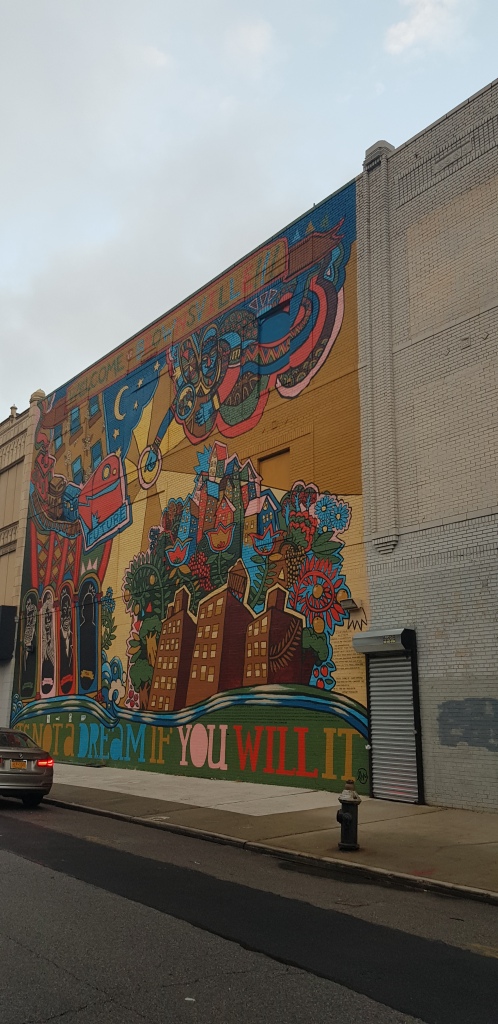
Seeing as these murals have been around for several years and are still in tip-top condition, the community at large must have some pride in these street art murals. There was one final mural to check out, which featured Brownsville’s most famous breakout star – Mike Tyson.
As it was getting late in the day, I did a quick backtrack one more time, and headed to the intersection of Osborn Street and Belmont Avenue. Eventually, I spotted the mural of the famous boxer further along Osborn Street.

Finally, having my fill of cool murals and street art for the day, I made my way back along Pitkin Avenue for the last time.

Before 2020, I would openly recommend anyone to walk through Pitkin Ave in the day, but as violence has taken a turn for the worse throughout the inner city neighbourhoods of Brooklyn, I may have to rescind on those words. As I walked towards the Sutter Avenue/Rutland Road station, I took one final photo of the looming housing projects in the distance, as lights began to switch on in many of the apartments, and I wonder what conditions are they living in, having seen videos of squalor and failing infrastructure in many other NYCHA developments.

Similar to my previous trip to Brownsville, I made my way to the very end of the train and took two videos of the surrounding area.
I’ve been trying to keep tabs on Brownsville as best as I can, and it has had its share of highs and lows the past few years. Even though it seems to be gentrifying from the inside, there have been incidents such as the Brownsville Old Timers Day mass shooting in 2019 (1 dead, 11 injured), which I would have thought would be free of gun violence out of respect for the tradition.
A sentiment I found from some videos and articles is that the older generation of Brownsville citizens feel that the younger generation that have come after them are even more reckless, with no regard for unwritten laws that they once abided by. In some bizarre twist, Brownsville today is somehow less dangerous in terms of gun violence rates, but also more lawless if what they say holds true, and more innocent victims will likely be caught in the middle.
This concludes my walk through Brooklyn’s most infamous neighbourhood – maybe I’ll make plans to explore East New York next time, especially if I can find a local guide to bring me around and see some of the cool street art spots.
There is one place I visited outside of New York City that is known to have even higher crime rates than Brownsville, although I stuck to the safer parts of this place and found it to be quite an amazing hidden gem in the end. I’ll see if I have some time to write more about that in 2021.
 Finding hidden gems in the underbelly of NYC