Featured

Newark – Hidden gems amidst the blight

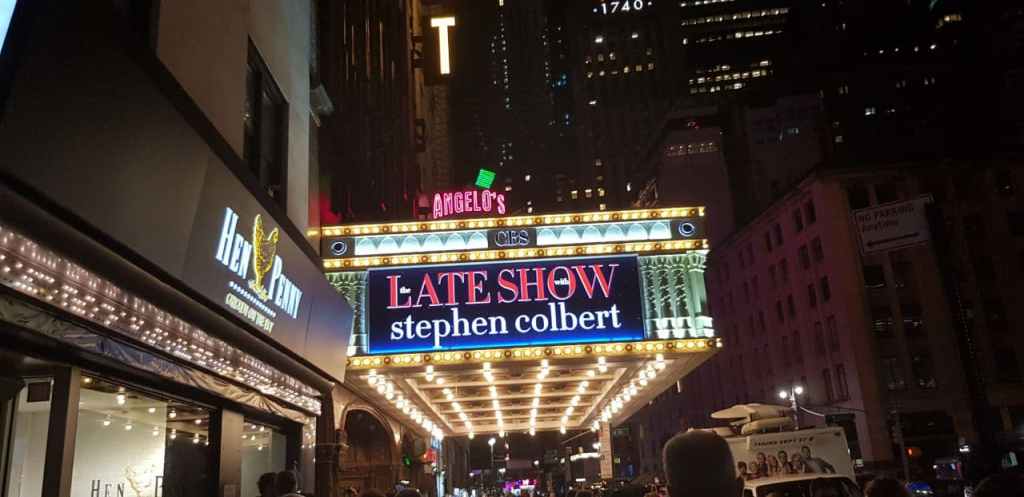
Taken after watching The Late Show in person

After the thrill of seeing The Late Show in person (and getting the chance to shake Colbert’s hand as he walked by the seats :D) in late September, decided to look up whether he was doing any shows/appearances. Turns out he would be appearing with Meryl Streep at the New Jersey Performing Arts Center (NJPAC) in Newark, and I hastily booked a ticket for the event.

Fast forward to late November, ticket prices had dropped significantly (I’d initially paid US$60 but there were tickets available for half that price eventually) – whoops. Nevertheless, I was still excited to get out of New York City for a change and see what Newark was like.

Besides knowing that Newark had an airport, I knew precious little else about the city, but started digging in by finding what possible places to have dinner at, before the actual event at 8 p.m.

Always on the hunt for decent soul food, I started scouring the surrounding neighbourhoods which were somewhat close to NJPAC, and found a really promising place called Redwood Cafe Supper Club (they closed down :() – ticked a lot of the right boxes for me since it was family-run, a little off the beaten track, reviews about their ribs were great – but it was a bit further in than I’d have liked.
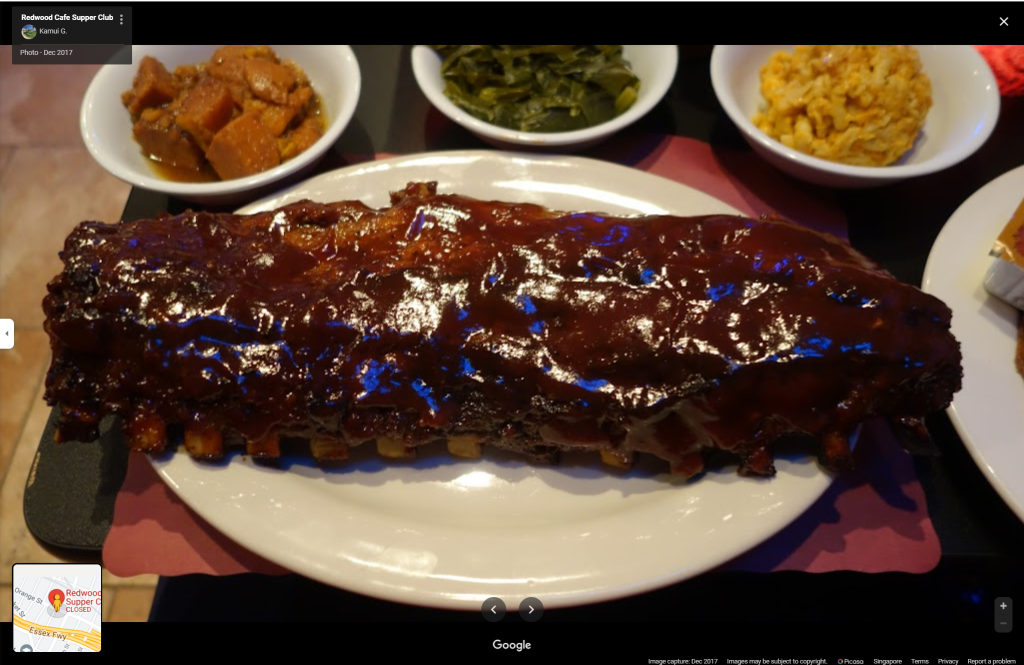
But how could you resist those ribs?! Source: Google Reviews

Went to look up a crime zoning map (which aren’t always accurate, but served as a good enough gauge in NYC) and realised it was a good 10-minute walk on the border of the seediest areas of the city from the closest rail station.

From the Orange Street Light Rail Station, it was about 10 minutes away.

Streets looked even rougher than what I’ve been used to in the rougher parts of NYC – like a combination of industrial bits of Red Hook and some East New York streets I saw on Google Maps – and I’d been walking around at night, in a fancy Gucci coat for the event – really asking to be jumped if I did go for it.

After toiling with the decision for several days, decided to abandon heading here and to check out another neighbourhood called Ironbound (also known as Little Portugal), which was southeast of NJPAC and much more walkable (and safer). Read up more about Newark and became more informed about it as a whole, and decided to play it safer for the first visit, since the level of blight is almost at a city-wide level.

Source: NY Post

Made some final preparations of a rough itinerary of which places to hit up in the Ironbound section (wasn’t easy too, had a ton of nice restaurants/cafes to check out) and made my way over that afternoon.

Actual screenshot of the route I took that day – stopped at Newark Penn Station

After reaching Newark Penn Station, tried to orientate myself a little about the surrounding areas, since I’d be passing through again to get to NJPAC later that evening. Snapped a photo of this monument while walking by, and took a lot of effort to find the meaning behind it (finally succeeded in finding out tonight – failed on previous attempts).

The Immigrants Memorial Monument consists of 14 people (men, women and children) waiting in line – supposedly in a customs line at Ellis Island, which was the point of entry for all immigrants in the earlier half of the 20th century. More details here.

There is also a poem, inscribed by a local city councilman, at the base of the monument.

Photo credit: Jersey Digs.

More recently, saw on a Reddit thread about Newark that the quote has been defaced though..
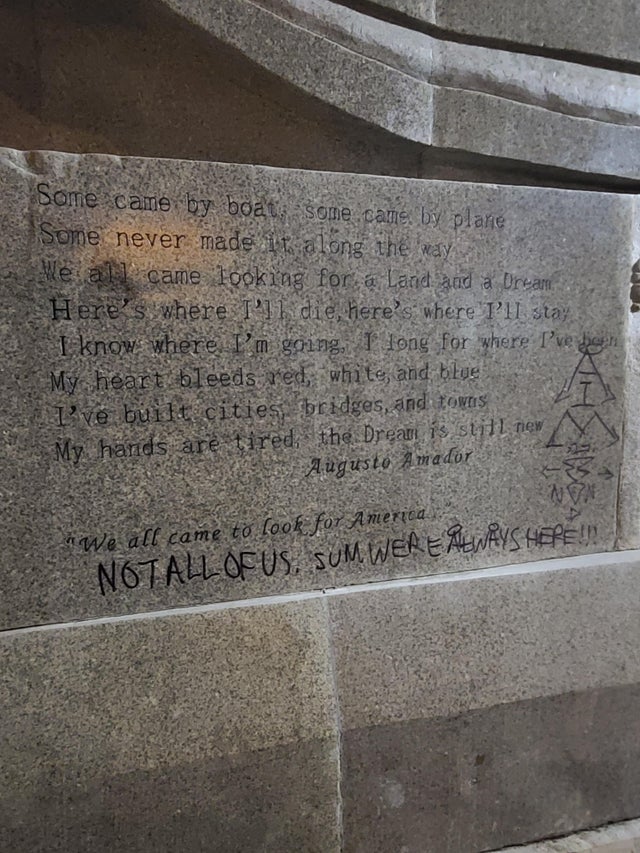
Source: Reddit

Moving on into Ferry Street, the main thoroughfare of the Ironbound neighbourhood, was welcomed by this banner.

Not sure how many people from out of town actually know about the Ironbound though

I didn’t check Google Street View much for this area, so it was actually a nice surprise and a pleasant walk through the area, as I made my way to the restaurant I’d decided on indulging at for the night – Casa d’Paco.

Sat along the bar since most of the other tables were for groups of 4 and above – actually wished I’d done this earlier for other places on hindsight.

Was already well-versed in their menu, and immediately ordered a paella Casa d’Paco, before they’d even asked if I’d like to see the menu.

Had a lengthy chat with the server here, who hailed from Caracas, Venezuela. I name-dropped having had arepas at a couple of spots around NYC and his eyes immediately lit up (it’s always amazing when food becomes that bridge for building connections across cultures). I knew enough about how bad the situation was in Venezuela, and asked him about it. He said he got out of there almost a decade ago, and was so thankful all the time that he managed to make it out, before it became a total anarchy in some parts of Caracas. He was a firm believer of the American Dream and just having the opportunity to work in the US already meant the world to him. I just had a lot of respect for the grit he had and he had that sort of hustler/go-getter + fire in his belly vibe, since he started with almost nothing but an opportunity to work in the US and build his way up from that opportunity.

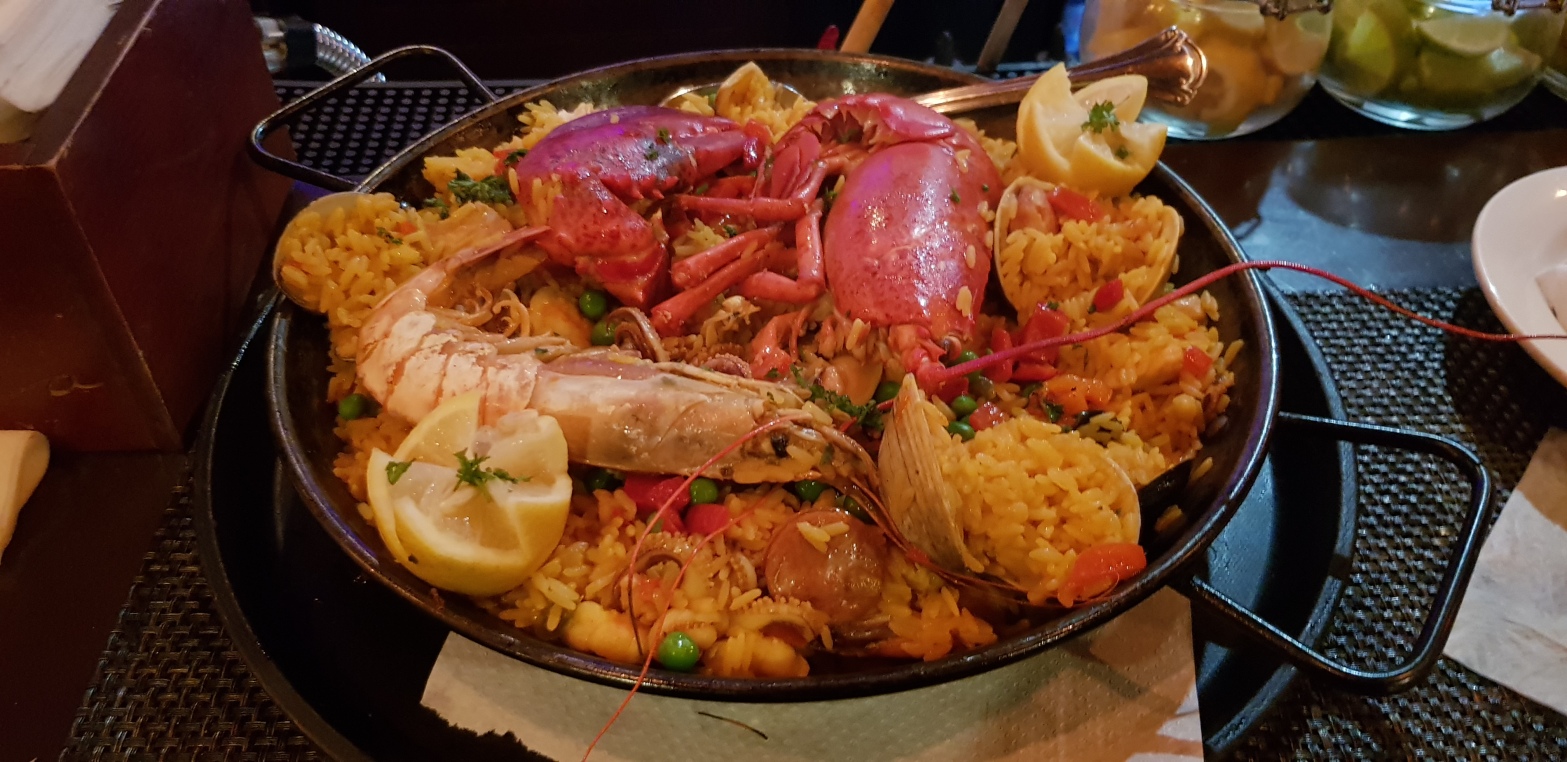
We were suddenly interrupted by the arrival of my paella, and it was an absolutely monstrous portion!

At this point, it became abundantly clear that this portion was meant for 2 people (it wasn’t stated in the menu) – should have known better since I’d already seen photos of it on Google Reviews, but didn’t have a sense of scale of how large it would be.

Can’t help posting a photo of it as well

Throughout the meal, we chatted about more light-hearted stuff, including where I was from/where I was staying in NYC and how did I find NYC so far. Another server joined in at the bar after a while, and I eventually asked if they’d seen anyone finish this on their own, and the two servers laughed and said so far, nope. I half-jokingly said they should make this an eating challenge, and give this to me for free if I could finish it and they said they’d consider it haha – really nice guys. I tapped out at about the halfway point – then one of them cheekily said, “That means no free paella on the house though, are you sure?” and I tried feebly to make a comeback by saying in life, you sometimes have to know when to throw in the towel. They packed the rest of it into two flat takeaway bowls (which filled up almost all the way) – just nice that I could stuff them into my bag.

Gave my server a little extra over the usual 20% and as I was about to leave, he popped back by the bar again after serving another table to give me a fist bump – really nice guy. Really wanted to bring my friend back to try this place and at the time, fully expected to return to Newark at least once more, but sadly, that never materialised..

Really great hidden gem in Newark – though the entire Ironbound might count as one huge hidden gem.

Stepped out of the restaurant at about 5.40pm to find that night had fallen over the area. The streets comparatively were not as well-lit as what I was used to in NYC, but it was more of a calm vibe than anything else. Making my way back to Ferry Street, a slight drizzle started to come on – I usually have an umbrella on hand, but I just personally like the feeling of the small droplets on rain falling on my face (to the chagrin of my Asian mother when she has to beg me to use an umbrella as a kid all the time).

After half a mile, finally reached another spot I had my eye on – Teixeira’s Bakery.
The owner, Manual Teixeira, started this bakery in Newark in 1980, but hails from a family that has been baking for a staggering 150 years! Even though private investors took over the bakery in 2001, you would not be able to tell it from the mom-and-pop store atmosphere within. The entire shop was lined with all sorts of baked treats and I took a few moments to admire their array of pastries, cakes and ever

This was merely one-third of their elongated L-shaped display

Like a kid in a candy store, it was very hard to resist not ordering one of each item that caught my eye – as I usually did in other bakery stores like Rudy’s Pastry Shop in Ridgewood, Queens. But still being very full from the paella, I decided to be disciplined and got one of their specialties – the Pastéis de Nata, or what most Singaporeans would know as, the Portugese egg/custard tart.
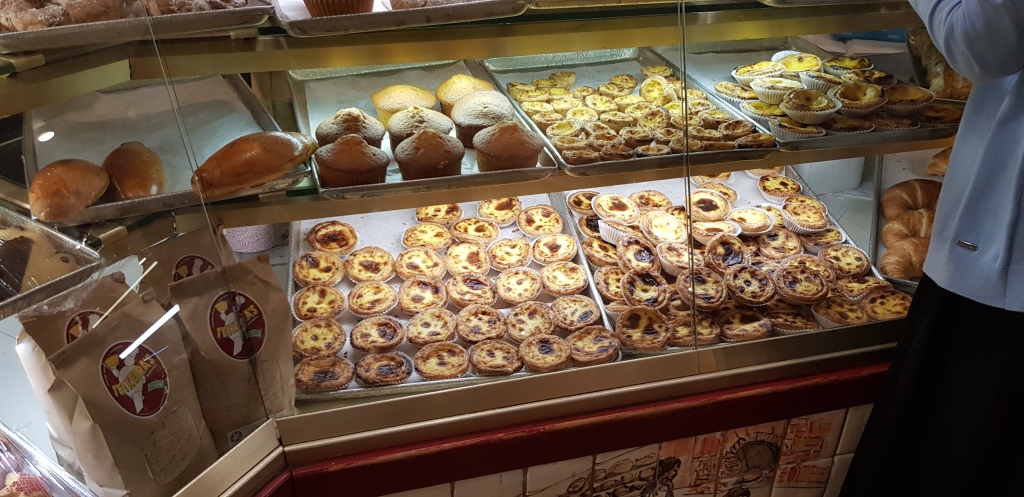
Can you resist getting more than one of these?

Should have just ordered half a dozen to go, but somehow I thought I’d be returning to Newark again really soon and decided to just get ONE (really stupid eh, after coming all the way here..). There were actually quite a few tables in the bakery and it would not be a bad place to spend an afternoon.

Exited the bakery to find that the drizzle was getting slightly heavier, though I still decided to soldier on without an umbrella. I really liked walking through Ferry Street – a lot of shops were already closed, but it was still nice to check out what they were selling. Remembered seeing a somewhat tacky menswear store, with suits that looked like they dated back to the 90s, with huge star-shaped price tags, at the storefront. Another shop sold kids’ toys, such as four-wheeled bicycles – think the stores in the main neighbourhood thoroughfare really helps to paint a picture of what demographic is living in the area.

While passing through Newark Penn Station again (this time at night) – couldn’t help being reminded of the Brussels-Noord area where the Rue de Quatrecht cuts across the station from Schaerbeek (though this was more run-down, with people publicly urinating and hobo-ing around – I suspect during the warmer months, one might see similar views in Newark Penn Station too though).

Was a pretty far walk (about 1.1 miles), but soon I spotted the NJPAC from afar – I was the only one walking these streets, while everyone else was driving through. Turns out I was standing right next to the FBI building while taking the photo below.

It didn’t feel unsafe walking through downtown Newark, but was just wondering why no one else was walking through the entire area (people can’t be that afraid of the rain..right?)

Walked through a bus terminal with not another soul around, before finally reaching the entrance of the NJPAC. There was a bag check at the entrance and the chap took out my paella and custard tart, before reminding me with a slight grin not to eat this inside and I assured him resoundingly that I won’t take them out haha.

After clearing security, saw a poster of the main event that was taking place that night.

The NJPAC actually looked pretty swanky and well-maintained – definitely could not tell that it’s been around since 1997. Found a bench along one of the alcoves and tried to do some reading, before more people eventually streamed in.

About half an hour left till the event started – was hoping to see if I could spot Colbert before the show started, but they probably have a VIP entrance somewhere else..

There was an announcement that we could head to our seats and I eagerly leapt up and bounded off to the nearest usher. Had a nice central view, although was a tad far away on the upper floor.

Sharing some photos of Colbert with his usual banter to soften up the crowd:

And after Meryl Streep joined him on stage:
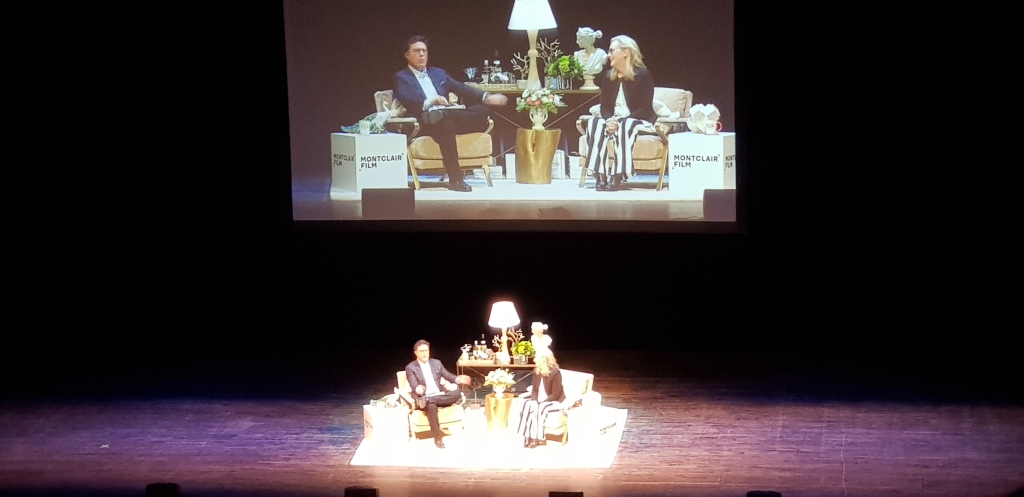
And then Colbert made martinis (with a lot of theatrics) for both of them on-stage:

Will not pretend I remember most of what was said that night – was in a bit of a stupor with the food coma. Found a page that describes bits of what I can recall, so I will defer to that here if you are interested in what they talked about during the event.

After about two hours or so, the event came to a close, and I was inwardly groaning about the somewhat tiresome journey back to NYC (including the same walk back to Newark Penn Station). Streets were even quieter during my walk back (everyone else had the good sense not to walk around late at night in Newark I guess), but definitely nothing dodgy or shady.

Still drizzling slightly on the way back

Initially made plans to return to the Newark Museum of Art, and dressing down (a lot!) to make the trip to Redwood Cafe Supper Club to get my hands on those ribs – but December passed so quickly and there was so much to explore and do in NYC that those plans fell by the wayside 😦

On hindsight, I probably still wasn’t fully aware of how rough things might be in Newark (or at least, I still hadn’t fully committed to make the trip, and didn’t do my homework about the area thoroughly yet). I knew Newark has always had a rough reputation, but still did not realise what city-wide urban blight looked like (in NYC, it’s usually at a neighbourhood-cluster level at most, like the South Bronx or Brownsville/East New York). Think I would have had a heart-thumping walk back to the rail station in the evening if I did go for those ribs.

Historically, there’s been a ton of problems plaguing Newark, especially the 1967 Newark Riots – don’t think the city has managed to fully walk out from under its shadow from all those decades ago – along with lead-contaminated drinking water (though the turnaround with replacing lead pipes throughout the city moved along surprisingly fast – in 3 years, instead of the projected 10 years).

Was also checking out recent videos of Newark, including a video of a young family moving into Newark without doing much research beforehand(?!) – and facing the consequences. Pretty sure there’s more decent soul food spots to discover throughout the various neighbourhoods here, but you definitely can’t go wrong with spending a day in the Ironbound section – perfectly safe, tons of great food options and quite off-the-radar too.

Oh and how did the Portugese custard tart taste? I feel like I didn’t have it at its best since I brought it home and refrigerated it before heating it up in the oven again the next day, but it was still fairly decent.
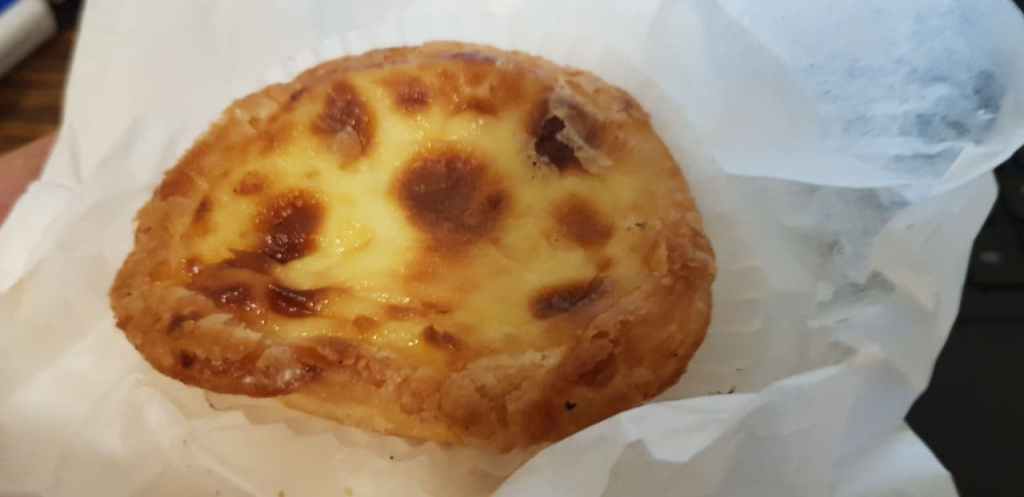
Looks a bit worse for wear but was still a great breakfast the next day

Have a couple of smaller adventures to cover (mostly in the Bronx), but will have to see when I have time to write about them again (don’t expect anything anytime soon).

Would you venture into the rough streets of Newark to get your hands on some authentic soul food in the hood? 😀

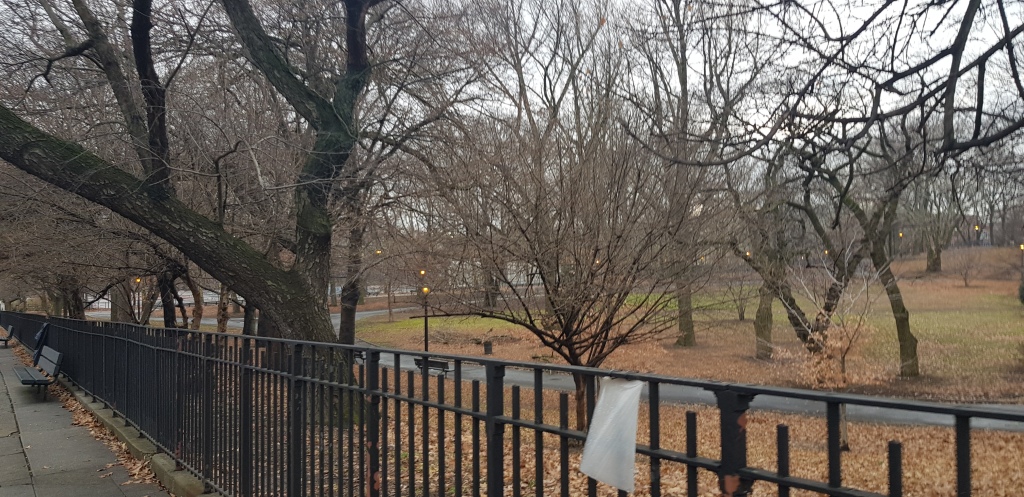
Return to Brownsville

Trudging along in the cold autumn air, I noticed a sprawling construction site opposite the Weeksville Heritage Center. Initially I thought it was going to be a commercialised property when looking at the modern exterior, but checking it now reveals that it’s a health and rehabilitation center. Along the way, there were multiple delis, and the occasional Chinese hole-in-the-wall spot, but gradually, I reached the border of Crown Heights that leads into Brownsville.

As I walked by the Lincoln Terrace Park, I looked inside but it was probably too cold for most people to venture outside (about 5°C). At the time I didn’t know much about this park, just that gun violence does occur fairly frequently at night here (even in 2020). After reading up about it now, it used to be a crime hotspot, as it is located at the intersection of four police precincts. Therefore, petty thieves could run into another precinct’s boundaries, which hinders the effort to catch them due to radio divisions among the precincts.

Lincoln Terrace Park – The Bermuda Triangle of Crime

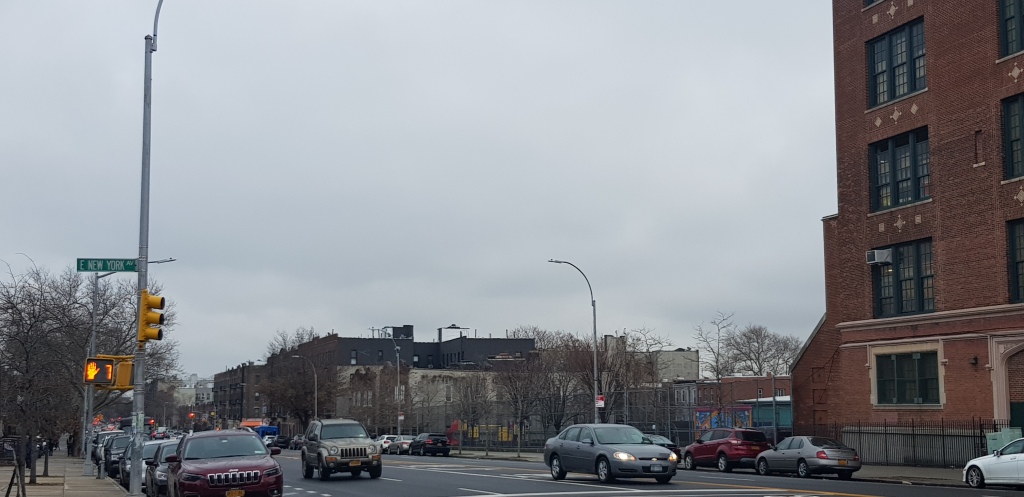
Eventually, I reached East New York Avenue and took a moment to survey the area. It was generally quiet, with few pedestrians around the area.

Intersection of East New York Avenue & Rockaway Parkway

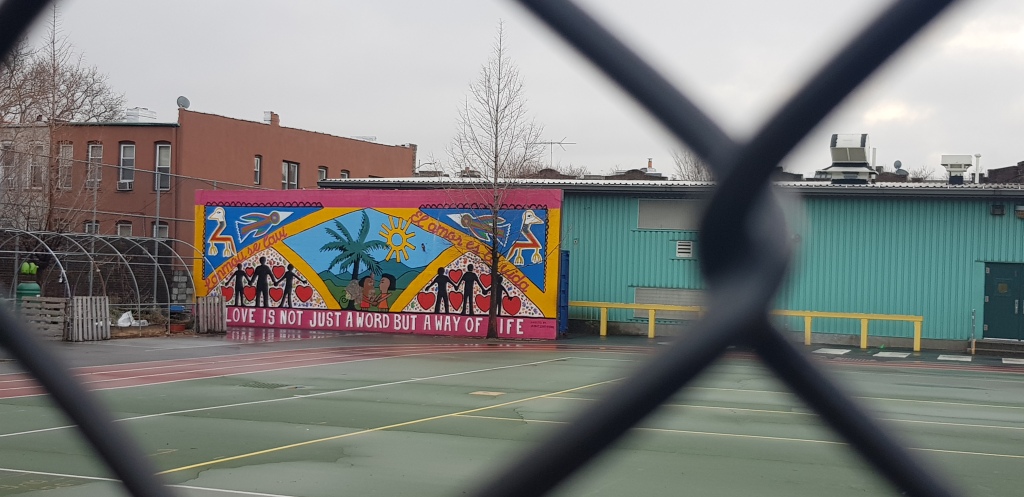
Walking along Rockaway Parkway, I noticed a mural on the opposite side of the street, at what appeared to be an elementary school. While crossing the street to the other side, there was a mother walking with her son side-by-side – she seemed slightly alarmed at first that I had suddenly crossed the street but her worries dissipated after I smiled and greeted her good morning. She smiled back but didn’t say anything and went on her way, with her son looking back curiously at what I was doing.

I tried my best to align my phone’s camera along the wired fence and snapped a quick photo – didn’t want to look too suspicious, even though there was hardly anyone around.

Mural at PS 189

I decided that instead of wandering around, I needed a proper base to plan on which murals I wanted to see in the area. Therefore, heading back to Blendzville Cafe seemed like the obvious choice, where I could grab a smoothie while also taking the time to plan which spots to hit up.

After entering the cafe, this time there was another table of kids and teens who seemed to be working on some sort of art project. Pascal, the owner, recognised me immediately, and said, ‘You’re back!’, with a hint of surprise in his voice. I was a little surprised since it had been at least a month since my last visit. I guess he doesn’t get that many Asian customers, since only about 1% of people who live in Brownsville identified as Asian.

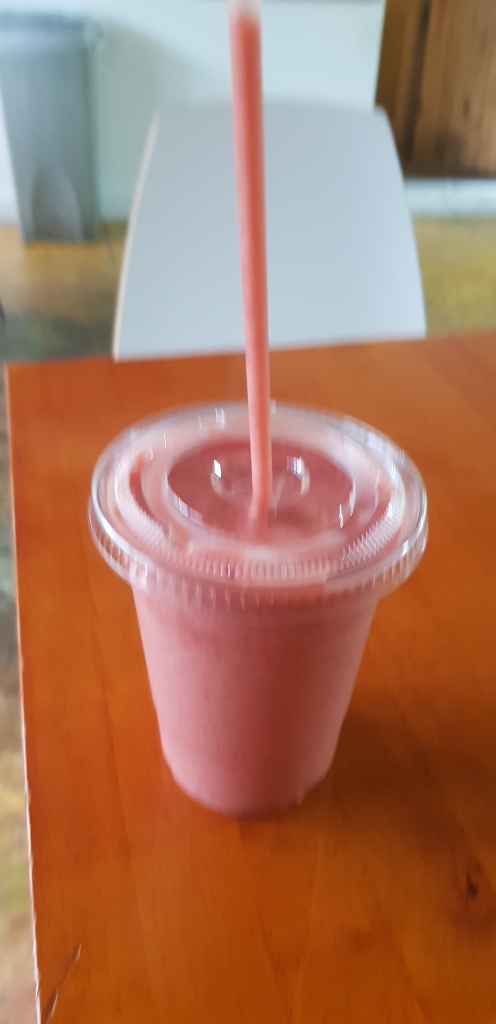
I had another look at the smoothie selection, but again, I had to go with the Parkway Potion smoothie, which consists of strawberry, banana, passion fruit and mango.

Really decent smoothie and it’s freshly made after you order – highly recommended

While sipping on the smoothie, I committed to memory the spots I wanted to visit, and decided to head back out after thanking Pascal. On hindsight, it must have been a weird sight for most of Brownsville’s denizens to see an Asian guy walking around with a bright pink smoothie walking around in their hood haha.

I decided to stick to Pitkin Avenue throughout most of my walk – this was the main artery of shopping streets that stretched across Brownsville. An article from TIME magazine titled ‘Brownsville: Inside One of Brooklyn’s Most Dangerous Neighbourhoods‘ in 2012 wrote about how a community leader who ran a recreation center, pretty much told the photographers that it would be insane to walk around on their own.

However, after my first visit to the neighbourhood the previous month, along with continually declining crime rates in this area (at the time), and considerable research into the existing crime trends in the area, Pitkin Avenue felt safe enough for me, especially in the day.

One of the first notable buildings I encountered stood out noticeably from all the rest. At the time, it was already in the late afternoon on a school day, and school children were bursting out from the gates of the building, so I refrained from taking photos in case of any potential misunderstandings.

The difference from when I saw the building was that the ground floor was full of construction, and Dollar Tree was no longer there.

Photo Credit: https://www.brownstoner.com/architecture/brooklyn-architecture1501-pitkin-avenue-loews-theatre-brownsville/

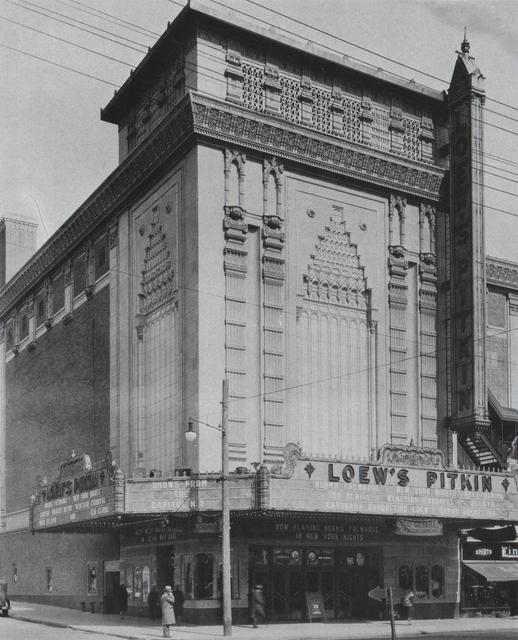
This building was formerly known as Loew’s Pitkin Avenue Theater and was constructed in an era where movie palaces were the prime choices for escapism, in 1929. At the time, Brownsville was still a Jewish majority neighbourhood and was even nicknamed ‘Little Jerusalem’ or the ‘Jerusalem of America’, and was considered a lower-middle class neighbourhood.

Loew’s Pitkin Avenue Theater in the 1930s

Photo Credit: http://cinematreasures.org/theaters/3887

However, the gears of demographic changes had already been set in motion, and African Americans & Latino Americans were starting to move into Brownsville, and occupied the poorest quality of housing available at the time. Most of these African American residents wanted to escape the Jim Crow laws that were prevalent in the South, and by the 1950s, the ethnic make-up of African Americans in Brownsville doubled from 6% in the 1940s to 12% in the 1950s. However, there were not enough jobs as factories in the area started closing down, bringing economic hardship to many of newly arrived African American Brownsville residents. The final straw for most Jewish Americans was when the New York City Housing Authority decided to build more public housing projects in the area, and there was a mass exodus of Jews out of Brownsville, citing rising crime as the major motive for moving out.

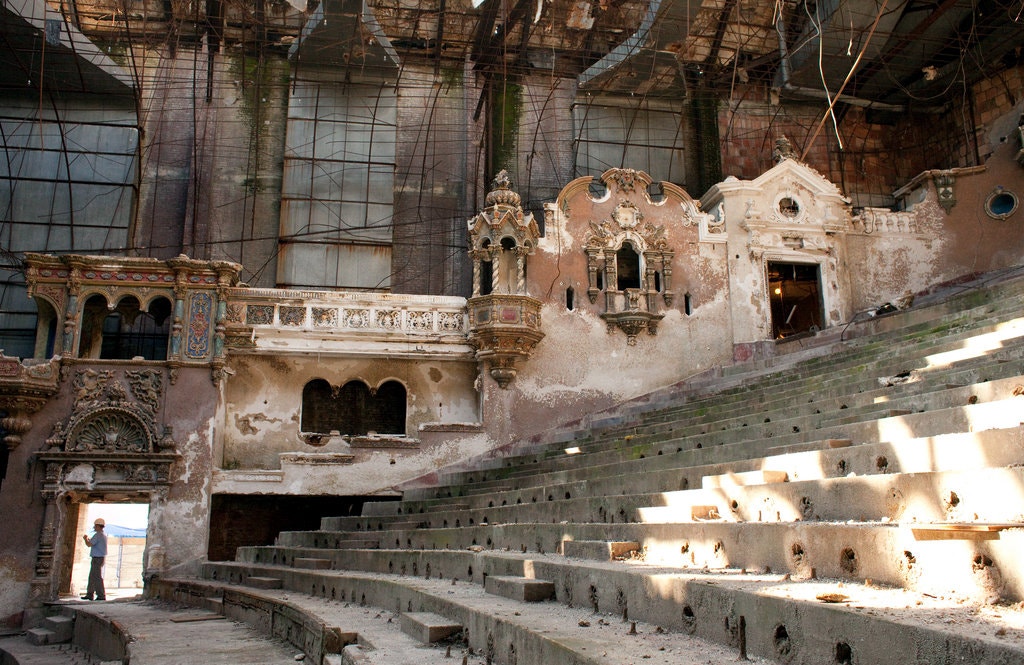
With the Brownsville neighbourhood’s shift in demographics and economic fortunes, so did that of Loew’s Pitkin Avenue Theater, which gradually closed in 1971. Even though its interior deteriorated quickly, its exterior remained mostly intact across the ravages of time.

The once opulent interior was in shambles.

Photo Credit: https://www.nytimes.com/2010/09/29/realestate/29theater.html

Apparently it was re-developed into a mixed use retail and charter school space, but when I walked by, I didn’t see any retail stores on the first floor and only saw the Brownsville Ascend Charter School logo behind the gates.

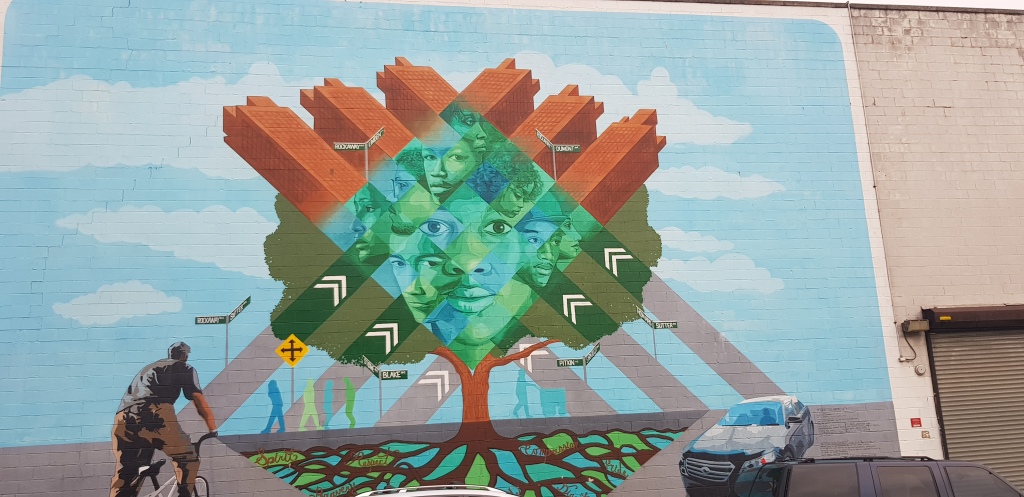
I deftly weaved through the suddenly bustling sea of students and continued along Pitkin Avenue. One of the first murals I spotted was this one.

Intersections Humanised – 2013.

The following excerpt is taken from Groundswell’s website about this mural:

Intersections Humanized was created by a group of teen artists participating in Groundswells Summer Leadership Institute, including some with a history of court-involvement. These young people collaborated with artists Chris Soria and Don Christian Jones and community partners the NYC DOT, Pitkin Avenue BID, and the Brownsville Community Justice Center to create a vision of shared streets in Brownsville and support the economic revitalization of historic Pitkin Avenue.

In the mural, a central constellation of individual portraits overlooks historic Pitkin Avenue. Together, these individual portraits highlight the strength and diversity present in Brownsville, while creating a positive shared identity for the neighborhoods 116,000 residents. The image is a powerful reminder of the critical role each of us has to play in transforming our community and promoting the livability of our streets. Text along the bottom reads Respect, Pride, Fortitude, and Compassion.

The unveiling of this mural is particularly meaningful as the City of New York announces a major grant from the National Endowment for the Arts (NEA), awarded to Groundswell to support the presentation of a transformative mural project in Brownsville entitled Transform/Restore: Brownsville. This participatory public art project will engage high-risk young adults, local businesses, and community members in creating visible and permanent change in one of New York City’s most challenged neighborhoods.

I would have liked to get a full photo of it, but there was a vehicle blocking the bottom portion of the mural. Ah well..

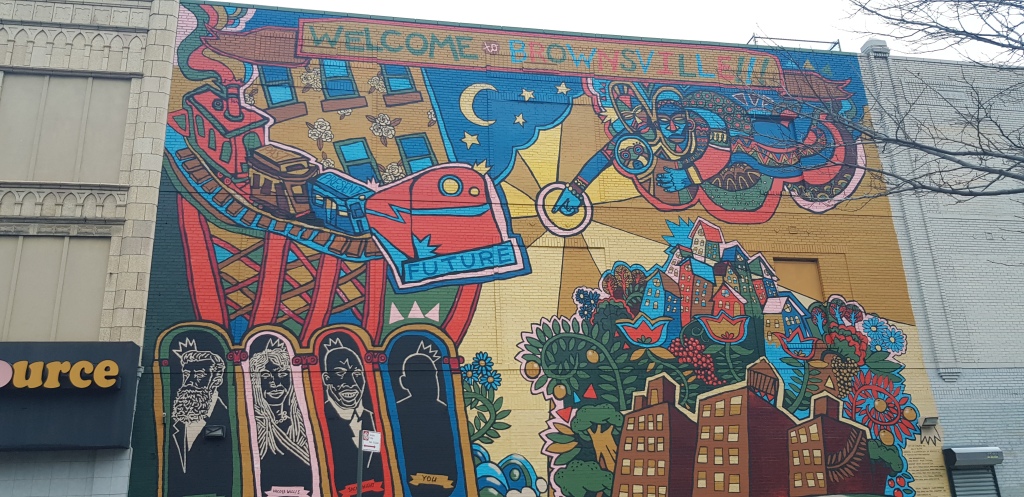
Continuing along Pitkin Avenue, I spotted what I initially thought was a catchy slogan atop a KFC, and somehow thought KFC had put it up at first.

It turns out this is an initiative by a nonprofit organisation called Church Avenue Merchant Block Association (CAMBA).

After reading about it later on, Brownsville In, Violence Out (BIVO) turns out to be an anti-gun violence initiative by CAMBA. One crucial part of the program is they have Violence Interrupters (VI) from Brownsville who were previously affected or involved in gun violence, to try and reduce the incidence rate of gun violence. Previously, I read about a similar approach being done in Hempstead, Long Island in ‘The Triangle: A Year on the Ground with New York’s Bloods and Crips’, in which a church-led group tried to perform the same role of reducing shoot-outs among the two warring gangs.

Moving further along Pitkin Avenue, I soon arrived at Mother Gaston Boulevard, which had previously been termed as New York’s Belly of the Beast by Al Jazeera. What’s significant about this street is that it is a notorious boundary that divides gang territories in the area, and there have been way too many innocent victims because of bullets that were meant for others. Beyond this spot to the east, there was only more housing projects, auto repair shops and East New York in the distance.

It is at this notorious intersection where one of the most inspirational murals can be found.

Brownsville Moving Forward Mural

The following excerpt about the Moving Forward mural is from Groundswell’s website:

Created by 17 young adult artists and 2 professional artists, this mural helps to create an inviting gateway at the entryway to this historic Brooklyn neighborhood. The text-based image captures the cross-sector dynamism present within the neighborhood and reads Brownsville Moving Forward. Important community figures are highlighted throughout the mural, including renowned activist and educator Rosetta Mother Gaston, who founded local hidden treasure Heritage House, housed on the second floor of the Stone Avenue Branch of the Brooklyn Public Library. 

I had previously made plans to visit the Heritage House here on a Saturday morning some time back. I believe it was around the Thanksgiving weekend, which was brutally cold that year, so I decided to give it a miss in the end – regretting it now.

Looming in the distance a few blocks away were one of Brownsville’s eighteen housing projects. As mentioned in previous posts, Brownsville has the highest concentration of public housing in the whole of America, and many of these housing projects are still crime-infested till this day. In a recent article in October 2020 by NY Daily News, the Howard Houses along Mother Gaston Boulevard, which are mere steps away from where I took these photos, have been one of the deadliest homicide sites throughout the city. Moreover, New York City Housing Authority (NYCHA) residents have bore the brunt of worsening gun violence problem in the city – there were 67 reported shootings per 100,000 NYCHA residents, compared to 12 reported shootings per 100,000 non-NYCHA residents in the rest of the city.

I believe these are the Langston Hughes Houses, which are 22-storeys tall – the housing projects aren’t labelled very well on Google Maps

On the way here, I missed out a few mural spots, so I decided to head back the same way I came to check out these spots.

Taken along Thatford Avenue and Pitkin Avenue – next to an entrance leading to the Howard Houses

For the subsequent mural, I did not know its exact location, only that it was somewhere along Pitkin Avenue. Luckily, I spotted it on my way back when I had missed it the first time, along the intersection of Pitkin Avenue and Herzl Street.

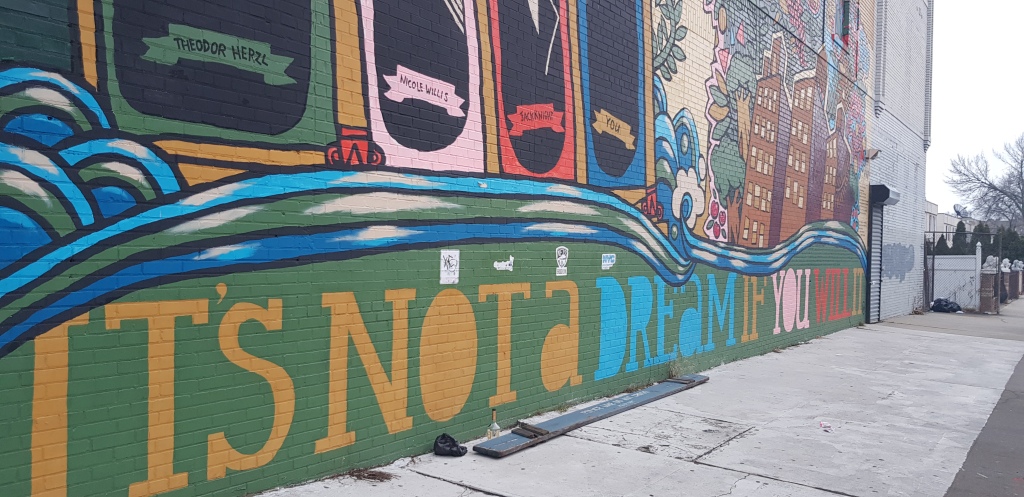
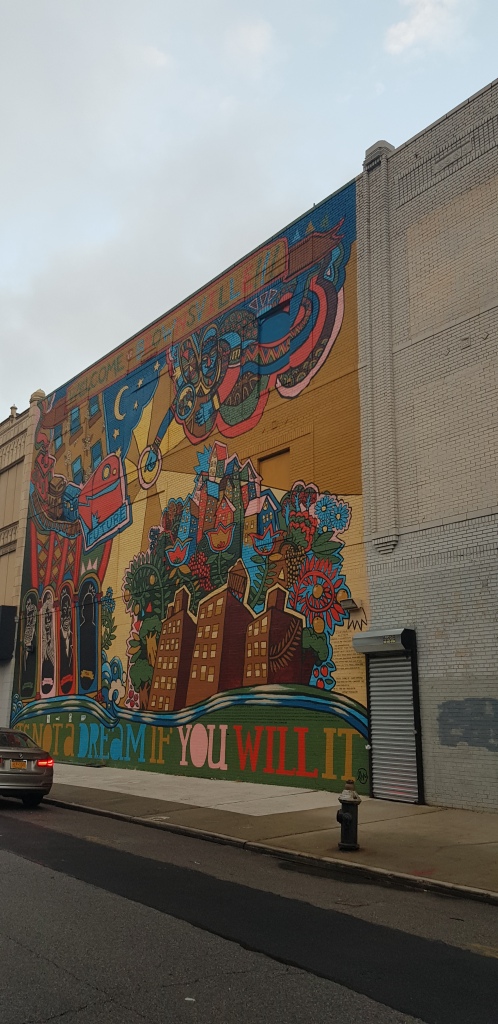
It’s Not A Dream If You Will It mural

The excerpt from Groundswell’s website is as follows:

Installed on Herzl Street, It’s Not A Dream If You Will It is inspired by Theodore Herzl’s famous quote If you will it, it is no dream. and encourages psychological transformation within the participants and the viewers. As the third mural to be unveiled among a series of five created through Transform / Restore: Brownsville, It’s Not A Dream If You Will It supports the transformation of the narrative of Brownsville through public art. Throughout the mural design and fabrication process, youth participants engaged in brainstorming sessions to re-define the concept of hero and role model.

During the research phase, the project team also visited the Brooklyn Museum and Brownsville Heritage House. We dug through the history of Brownsville, aiming to figure out a path for our community in the future. What is the best way to achieve that other than getting to know our neighborhood first? said youth participant Sean Turner, among five other Brownsville residents on the team. At the bottom left of the mural, a silhouette is nestled among Brownsville-born community leaders and celebrities, suggesting that everyone can become a neighborhood hero through this process of acknowledgment and discovery.

The water image at the bottom of the mural further suggests transformation through upward and continuous progress, inspired by Greek philosopher Heraclitus notion No man ever steps in the same river twice, for its not the same river and he’s not the same man. Launched with funding from the National Endowment for the Arts (NEA) through its national Our Town initiative, Transform / Restore: Brownsville is designed to engage young adult probation clients, local businesses, and community members in the creation of visible and permanent change in Brownsville, Brooklyn.

I really wanted to get a good photo of this mural and was trying to angle my shots, but to no avail. Some passers-by noticed me taking photos of the mural, but didn’t pay me much attention beyond some curious looks.

The bottom of the mural – was blocked by a car again..
Acknowledgements about the mural

I also feebly tried to take a video of the entire mural. I took my time to examine each element in this particular mural, and hope it has done some good in inspiring the community.

This was the best I could do to fit in the entire mural in one photo

Seeing as these murals have been around for several years and are still in tip-top condition, the community at large must have some pride in these street art murals. There was one final mural to check out, which featured Brownsville’s most famous breakout star – Mike Tyson.

As it was getting late in the day, I did a quick backtrack one more time, and headed to the intersection of Osborn Street and Belmont Avenue. Eventually, I spotted the mural of the famous boxer further along Osborn Street.

I believe not many people living outside Brownsville know about this mural’s existence

Finally, having my fill of cool murals and street art for the day, I made my way back along Pitkin Avenue for the last time.

It’s not super clear in the photo, but it writes ‘Pitkin Ave Welcomes You’.

Before 2020, I would openly recommend anyone to walk through Pitkin Ave in the day, but as violence has taken a turn for the worse throughout the inner city neighbourhoods of Brooklyn, I may have to rescind on those words. As I walked towards the Sutter Avenue/Rutland Road station, I took one final photo of the looming housing projects in the distance, as lights began to switch on in many of the apartments, and I wonder what conditions are they living in, having seen videos of squalor and failing infrastructure in many other NYCHA developments.

Taken along Sutter Avenue

Similar to my previous trip to Brownsville, I made my way to the very end of the train and took two videos of the surrounding area.

I’ve been trying to keep tabs on Brownsville as best as I can, and it has had its share of highs and lows the past few years. Even though it seems to be gentrifying from the inside, there have been incidents such as the Brownsville Old Timers Day mass shooting in 2019 (1 dead, 11 injured), which I would have thought would be free of gun violence out of respect for the tradition.

A sentiment I found from some videos and articles is that the older generation of Brownsville citizens feel that the younger generation that have come after them are even more reckless, with no regard for unwritten laws that they once abided by. In some bizarre twist, Brownsville today is somehow less dangerous in terms of gun violence rates, but also more lawless if what they say holds true, and more innocent victims will likely be caught in the middle.

This concludes my walk through Brooklyn’s most infamous neighbourhood – maybe I’ll make plans to explore East New York next time, especially if I can find a local guide to bring me around and see some of the cool street art spots.

There is one place I visited outside of New York City that is known to have even higher crime rates than Brownsville, although I stuck to the safer parts of this place and found it to be quite an amazing hidden gem in the end. I’ll see if I have some time to write more about that in 2021.

Weeksville – Formerly the second largest free Black community in America

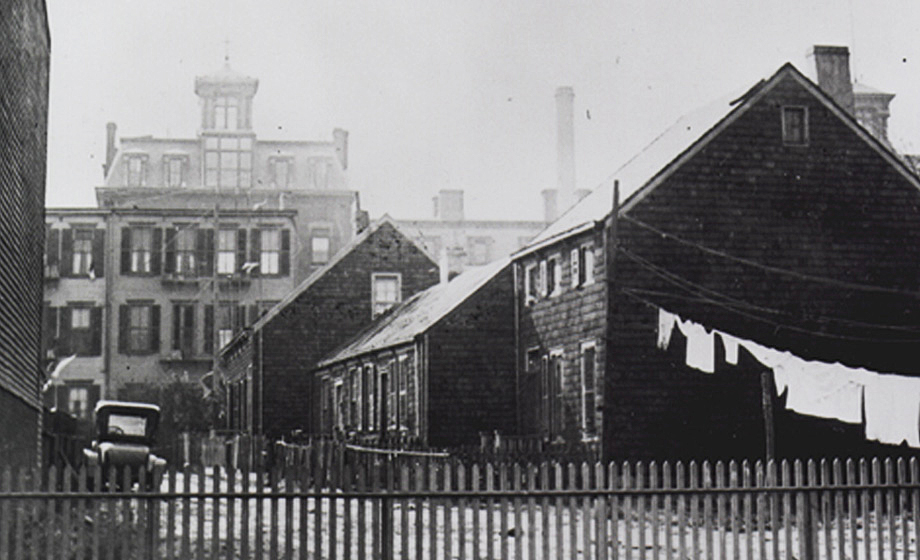
If you were to mention Weeksville to the average non-Black New Yorker, chances are you would be met with blank looks – perhaps understandably so. Weeksville’s history stretches back almost two centuries ago to 1838, where it was envisioned as a safe haven for African Americans who wanted to live on their own terms, and build up their own community.

Historic Hunterfly Road Houses via the Brooklyn Historical Society.

I’ll show the modern-day photos I took later on.

Slavery had just been abolished in New York in 1827, so there were many African Americans who lived in the South that found Weeksville appealing. The 13th Amendment (which officially abolished slavery) was only passed after the civil war ended in 1865, so New York was likely seen as very progressive at the time for many African Americans. Weeksville was also rather isolated at the time as well, as it was across the river from Manhattan (there was no bridge at the time and one had to take a boat over to Brooklyn) and it was mostly farmland and undulating low hills.

At Weeksville’s peak in the 1880s to early 1900s, more than 500 people called it home, and it was a self-sufficient community, with its own doctors, teachers and journalists. Land ownership was a key premise for voting rights in New York at the time – white men were allowed to vote regardless of whether they owned property, but for black men, they were required to own property worth at least $250 in order to be given voting rights. Therefore, Weeksville was an ideal solution – a community of landowners in which African Americans could truly be free.

However, the beginning of the end came with the construction of the Brooklyn Bridge, which opened in 1883. As Brooklyn became more accessible to those coming from Manhattan, the community of Weeksville became subsumed by the burgeoning neighbourhoods such as Bedford-Stuyvesant (now, Weeksville is considered as part of Crown Heights). Luckily, the area was designated as landmarks in 1970, and the Weeksville Heritage Center was later constructed in 2013 – which was my destination for the day.

At the intersection of St. Marks Ave & Rochester Avenue.

After getting off Utica Ave station on the 4 train, I made my way through Utica Avenue and gradually reached the intersection of St. Marks Ave & Rochester Ave, which was about one block away from the Weeksville Heritage Center, which is next to the Kingsborough Housing Projects. You can see the towering 25-storey Kingsborough Housing Project Extension building in the distance in the photo.

Weeksville Heritage Center building facade from Buffalo Ave

When I reached, I was a little surprised at the grandeur of the space. From my previous experiences walking around the area, east of Utica Avenue is mostly untouched by gentrification and has remained largely the same, and the area is still prone to some sporadic gun violence, especially at night. Therefore, the Weeksville Heritage Centre looked vastly different from everything else in the surrounding area.

Taken near the entrance to the center.

After greeting the lady manning the counter, I realised I seemed to be the only visitor today. This was later confirmed when I signed into the visitor logbook and saw that the previous entry was written yesterday, and anxiously enquired about whether the tour was still on. Luckily, she re-assured me that it would still go on as planned.

The space was immaculately clean and modern, and you could scarcely differentiate the Heritage Center from any other cultural sites in Manhattan when you are inside, despite the surrounding area being largely untouched by gentrification.

From here, a long, windowed corridor led to the heritage center’s function room, which looked like it could comfortably seat about 80 people. I made my way up a flight of stairs in the corner to reach their library, which was fairly spacious and well-lit.

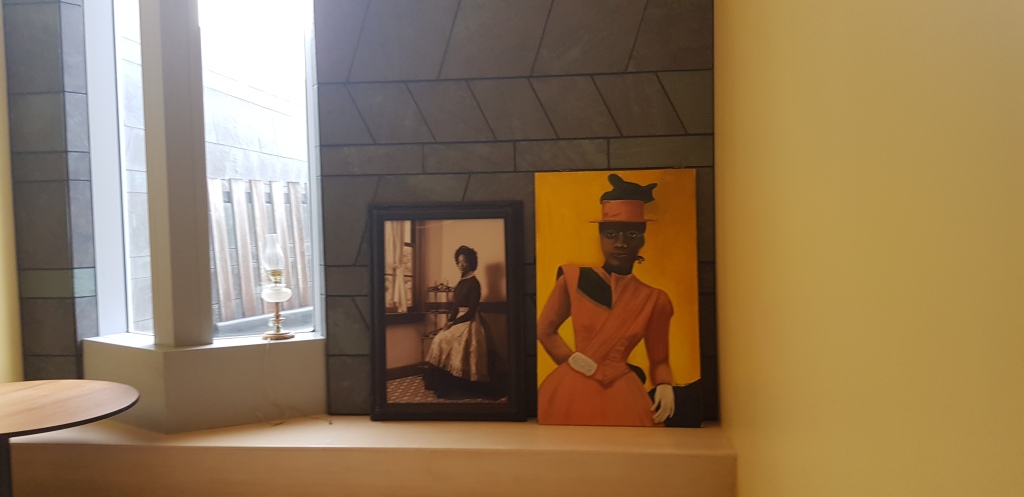
I’m not sure who these women are, but they may have originally been part of the Weeksville community, which was known to have the first Black female principal and doctor in New York state.

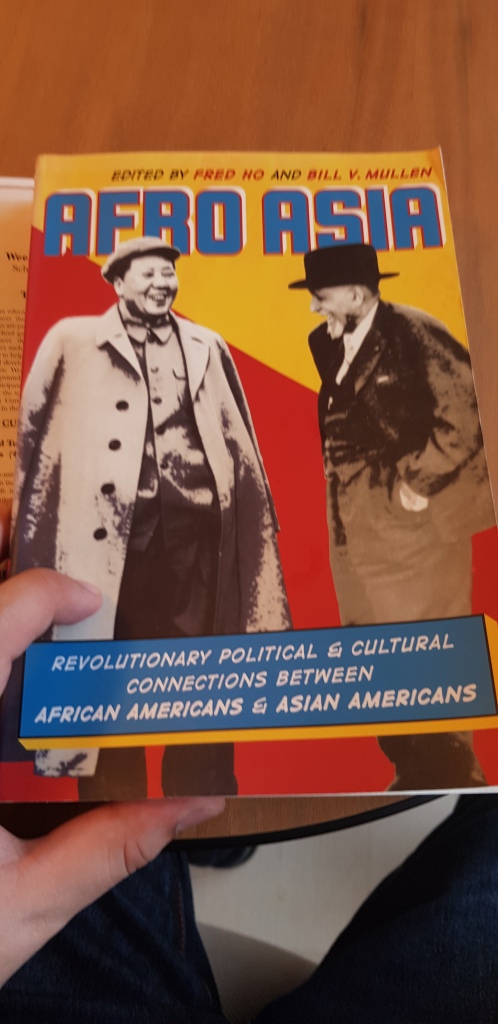
The shelves were all lined with books on African American heritage and history. One particular book caught my eye though.

I thumbed through the book fairly quickly, while reading excerpts from some chapters, but it was very fascinating, including one about how there was an Asian American lady who was very prominent in Harlem as a champion of African American rights and accepted by the community there.

Would love to get around to reading this book one day, but anecdotally, it feels like there’s more distrust between the African American and Asian American communities in more recent times. I did read about movements led by Asian Americans supporting the BLM movement, but I do not know enough to comment on whether most Asian Americans are apathetic or sympathetic to the BLM cause.

After looking through a few more books, I decided to make my way back to the registration counter for the tour, which would showcase the historic Hunterfly Road Houses shown in the first photo, that have been preserved till today.

The tour guide soon appeared, and I was the only participant for the tour. A very eloquent teenager, she gave a brief introduction about the Weeksville community and the Weeksville Heritage Center, before we headed outside to the Hunterfly Road Houses.

Each house is meant to represent a different time period, of how its inhabitants lived in that particular era. The house on the left dates back to the 1860s, the house in the middle dates back to the 1900s and the rightmost house reflected the 1930s. The following descriptions are taken from the Weeksville Society website.

1860s Historic House

A single-story, double-house that contains furniture and other artifacts relating to the mid-19th century. Visitors learn about the agrarian village of Weeksville and its inhabitants during the Civil War era. During the 1863 New York City Draft Riots, Weeksville served as a refuge for African Americans escaping the violence in Lower Manhattan. At this time, residents enjoyed a self-sufficient life, participating in a variety of occupations and developing several important community institutions.

1900s Historic House

A two-story wood framed house that was inhabited by the Johnsons, an African American family of three generations that lived here in the 1900s. Visitors explore the themes of family life in the 1900s against a backdrop of increasing community diversity and national hostility towards African Americans, as well as learning about technological advances of turn-of-the-century America.

1930s Historic House

The Williams family, who lived here from 1923 to 1968, stayed together during one of the toughest times in US history – The Great Depression. The artifacts in this house reflect those times and are based on actual furniture and objects that were owned by the Williams. The music, warmth, and stories of this family come alive during a visit to the home.

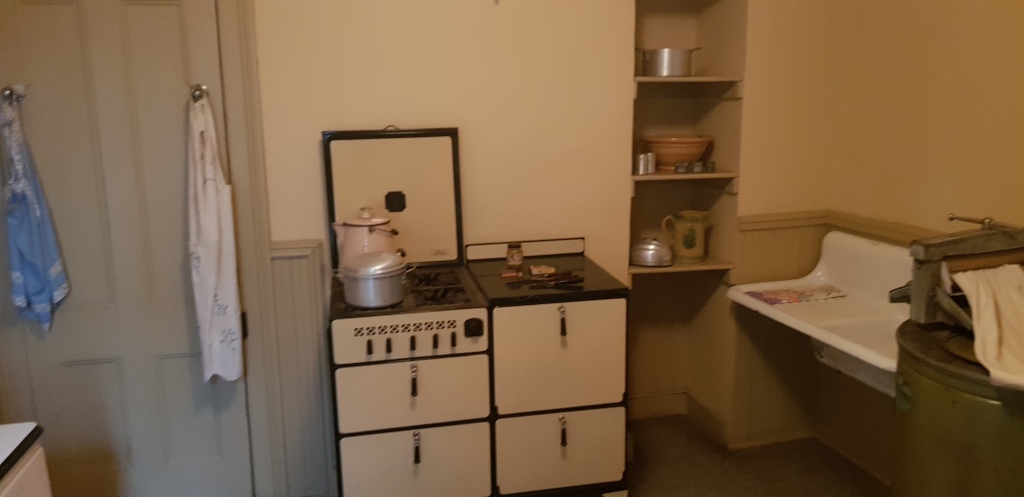
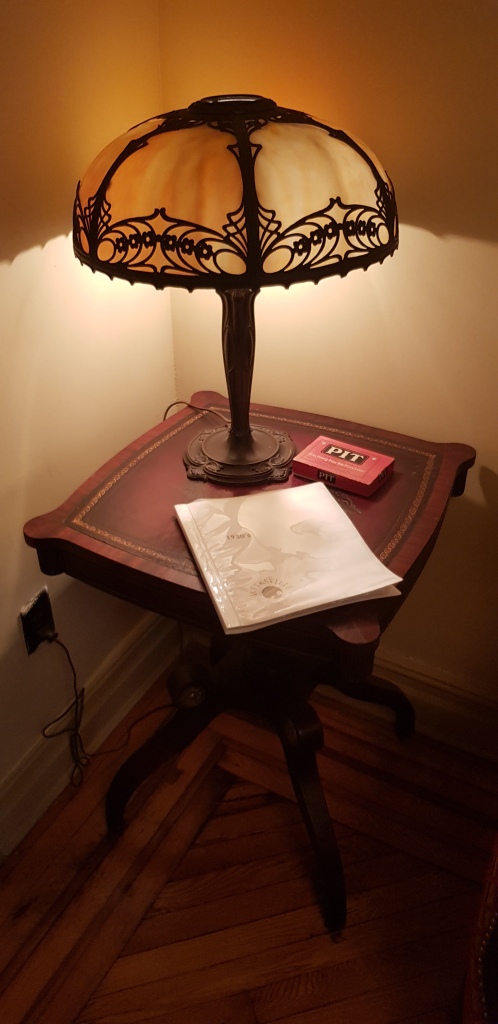
I took some photos of the artefacts in the houses – I can’t remember which photo belongs to which house. I only found out from my tour guide later on that normally photos aren’t normally allowed inside the houses, but she let things slide for these ones 🙂

I took one last 360-degree video of the area and the tour came to an end afterwards.

I chatted with the tour guide about the area afterwards, and she expressed some surprise when I said I’ve been in the area before and some amazement that I’d even been to Brownsville before. I also told her I’m actually from Singapore and she said she’d watched Crazy Rich Asians and asked how it was like here.

On hindsight, I probably burst her bubble a little too much when I said around 80% of Singaporeans live in public housing (housing projects in NYC are usually run-down and in disrepair) and that the movie blew things out of proportion, with the film showing many locations in Malaysia as well. She seemed a little disappointed afterwards – oops. Even so, she warmly welcomed me to return for future events, and that the Weeksville Heritage Center does events fairly regularly.

After we bade goodbye, I emerged into the cold, crisp January air in Crown Heights once more. Thinking about my next steps for the day, I then decided (on a whim) to make another visit to Brownsville – this time, to check the numerous murals and street art around the area. As Crown Heights borders the western boundary of Brownsville, it would only be about a 15 minute walk to reach there.

In my next post, I will showcase some of the mural photos I took and discuss the Brownsville neighbourhood more.

Brownsville – The Murder Capital of New York City

Brownsville: Never Ran, Never Will

As the morning of 4 December dawned, the weather had thawed considerably and I made the decision – to visit New York City’s infamous murder capital, a neighbourhood named Brownsville in the heart of Brooklyn.

The decision was not made lightly, but at the time, crime had decreased significantly in many parts of NYC, including Brooklyn. The New York Times even wrote an article on how East New York, the only other neighbourhood that rivals Brownsville’s crime reputation (East New York has the distinction of being known as ‘The Killing Fields’), had no murders up until April 2018, when the article was written.

Even so, shooting incidents do occur sporadically and it is easy to be at the wrong place, at the wrong time and be caught in the crossfire. Therefore, I decided to stick to the outskirts, and away from the main housing projects which dominate the landscape in Brownsville, which are known to be hot-spots for possible crime.

Credit: TIME Magazine. Taken from https://time.com/3785609/brownsville-brooklyn/

As mentioned in previous posts, Brownsville has the highest density of pubic housing projects within its one square-mile boundaries (East Harlem is the runner-up) in the entire United States. Although there are tons of housing projects around New York City, the ones here are known to be the most notorious in all the boroughs, along with the Pink Houses in East New York.

For the past few years, I started gaining an interest in sociology after doing research on the hikikomori phenomenon in Japan, and how social factors can shape individual lives on a massive scale. Brownsville is pretty unique as it has managed to stave off the blight of gentrification (read: hipster-fied) that has taken hold in nearby Crown Heights and Bedford-Stuyvesant and its streets have remained virtually unchanged for many decades.

I was piqued by how the denizens of Brownsville felt in the face of gentrification almost knocking on its doors and get a feel of what daily life was like there (another article I read stated that a substantial proportion of Brownsville residents do not travel outside its boundaries).

Additionally, the neighbourhood does have its interesting history tidbits – Brownsville was once home to Murder Inc., which was behind hundreds of hits and assassinations in the 1930s and 40s and run by the Italian mobs.

The former HQ of Murder Inc is now a seemingly innocuous bodega. Credit: Atlas Obscura

Known as the Midnight Rose Candy Store, it was run by a petite old lady in her sixties known as Rosie Gold. However, there was nothing innocuous in this little shop – there was a row of telephones that lined one side of the store. Whenever a phone rang, a member of the death squad would be given details of the hit. In total, it was estimated that 400 – 1,000 murders were carried out by Murder Inc., making them the single-most deadly organisation behind the most number of murders in the entire US (Atlas Obscura).

Despite Brownsville being known as a food desert by most, I found that there were two neighbourhood cafes that were recently opened by Brownsville natives. I decided to stick to the one that was on the outskirts of the neighbourhood on the border of Crown Heights and Brownsville to get a feel of the area first.

Getting on the 3 train at Atlantic Ave Barclays Center station, the train lumbered through Crown Heights and the train became increasingly empty. I felt a sense of trepidation as the train left the last stop of Crown Heights, at Utica Avenue Station and made its way into the boundaries of Brownsville.

Halfway there, the 3 train emerged into the crisp, mid-morning air as the Sutter Avenue-Rutland Road station was an above-ground subway station (something that I did not realise at the time). As the train rumbled to a stop on the platform, I alighted and took a moment to soak in my surroundings. The subway did not look considerably more run-down than other areas I had visited in Queens, and my friend who had accidentally taken the subway to East New York reported that it was much more sketchier.

Found an old photo taken of the subway exit back in 2007.

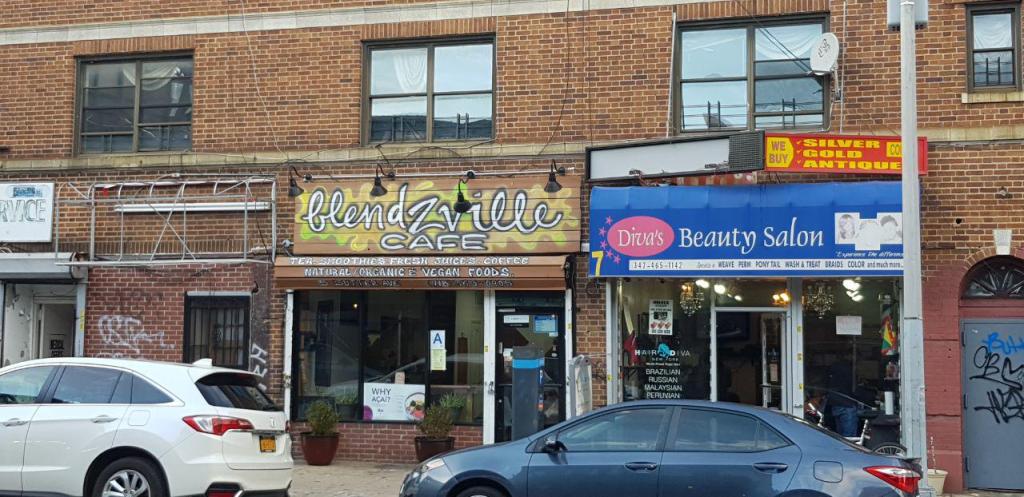
After climbing down a flight of stairs, there was a big, burly MTA officer stationed at the ticket gantry – mostly likely to clamp down on fare evasion. The station was not very crowded, although there was still a buzz of people coming and going. I had checked the direction to the cafe beforehand, so I made my way towards the correct exit and soon spotted my destination – Blendzville Cafe.

Doesn’t look too shabby from the outside eh?

I had initially seen photos of the cafe on Yelp and thought it looked warm and welcoming. However, the stark reality when I entered was a steep contrast, with white walls and a dimly lit interior. I paused for a moment at the threshold to make sure I was at the right place before entering and greeting the person manning the counter. He flashed a warm smile and asked what I would like to have.

As the name of the cafe alludes to, they had a variety of shakes and burgers. The shakes were creatively named with alliterations of the surrounding areas, such as Sutter Sunshine, Livonia Liver Tonic Juice and Parkway Potion.

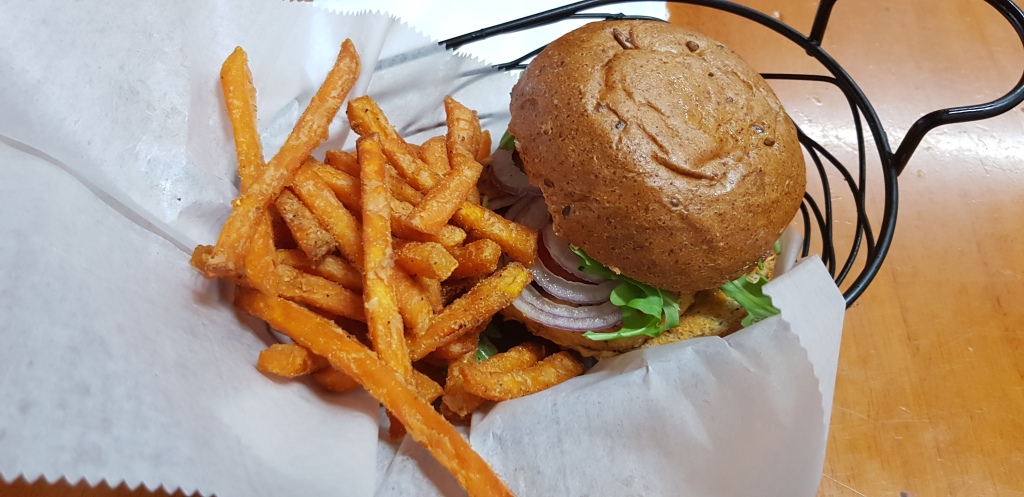
I ordered a salmon burger with sweet potato fries, along with the Parkway Potion (it consists of strawberry, banana, passion fruit and mango). There were only a few other patrons in the small store and I saw a few curious looks from the corner of my eye.

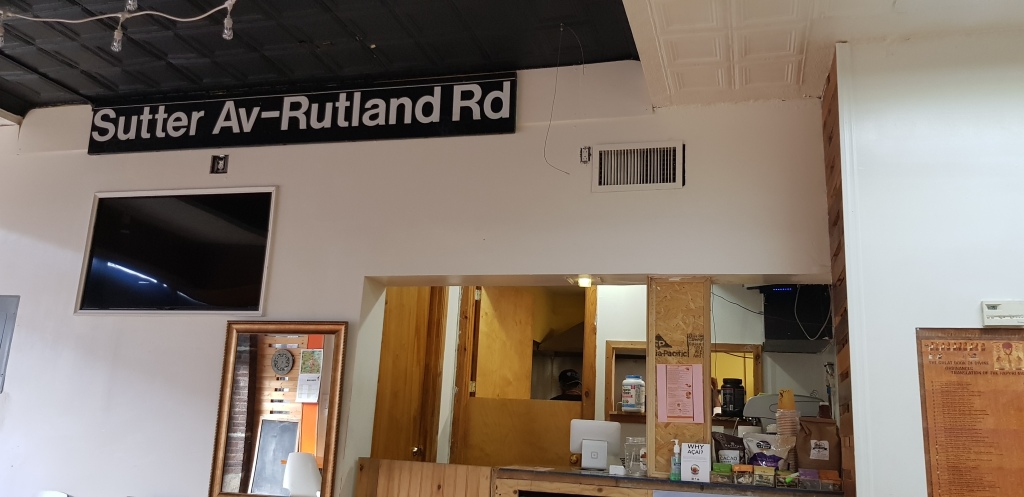
I sat on a table near the exit while waiting for my order and looked around the little eatery. There was a large sign of the Sutter Avenue-Rutland Road station lining the wall and a television that was switched off at the time.

You’d understand why I had a bit of a double take at first if you compare them to the bright orange wall photos on Yelp

The Parkway Potion smoothie arrived first and I took a quick sip. It was lusciously frothy and full of the strawberry flavour with hints of banana and mango.

Parkway Potion from Blendzville Cafe

The salmon burger soon arrived and I was pleasantly surprised by its size. I took a massive bite of the burger and the taste was pretty decent, with the decadent taste of salmon and no hint of fishiness at all.

The salmon patty is as thick as they come

While I was tucking into my food, the lady who had been eyeing me curiously could no longer contain her curiosity and struck up a conversation. She said she was from Jamaica (the country) and stayed in the area ever since she arrived. One of the first questions I recall her asking if I was staying around the neighbourhood or planning to move there. I hastily reassured her that I was just visiting and avoided the question of whether I would actually want to move there. We talked a little about gentrification and how there were small signs of it happening, even in Brownsville (to my knowledge, I only read about how houses on the outskirts of Brownsville were starting to increase in price). I also did not want her to think that I might be a symptom of the gentrification problem and that the end times (of low rent) are coming.

After I finished, I thanked the owner, Pascal, and bid goodbye to him and the lady. I decided it seemed safe enough to explore the immediate surroundings and walked around for a bit.

The disparity between Brownsville and Lower Manhattan which was barely 40 minutes away was surreal – how can two such vastly different places exist within such a short distance from each other? Manhattan continues to be one of the major hubs of the world and attracts the “yuppiest” of yuppies, while Brownsville has not known peaceful times for almost a century, as it is consistently plagued by gangs and drug violence. It almost feels somewhat like a death sentence to be born into this neighbourhood and very few success stories ever occur (Mike Tyson being one of the most famous examples).

I did not linger around for too long as it was approaching dusk and made my way back to the station and took a final quick video of the area.

I would return to Brownsville at a later date, in my final week of New York, after going to the nearby Weeksville Heritage House, to see the street art murals that very few outsiders have ever seen.

The former crack capital of USA – Red Hook

Red Hook
27.10.2018

On an overcast October Saturday, I decided to head into another Brooklyn neighbourhood, in search of a Haitian exhibition titled Potoprens (Haiti’s capital is Port-au-prince) at an artist space called Pioneer Works. I had to take the F train to a subway station in Carroll Gardens before it was about a 20 minutes walk.

As I reached the Smith-9 St. station, it was drizzling but I decided to brave the weather in search of Red Hook’s famous street food. However, as I walked through the deserted streets, I realised why no one was outside – the wind was incredibly strong, that I decided to go without my umbrella, in fear that it would get spoilt. As I walked under the Gowanus expressway, which loomed over the streets below, I could discern a palpable difference in the atmosphere, as the shops were replaced by run-down warehouses.

Thankfully, they soon gave way and I emerged at the Red Hook Park, with no one out and about due to the stormy weather.

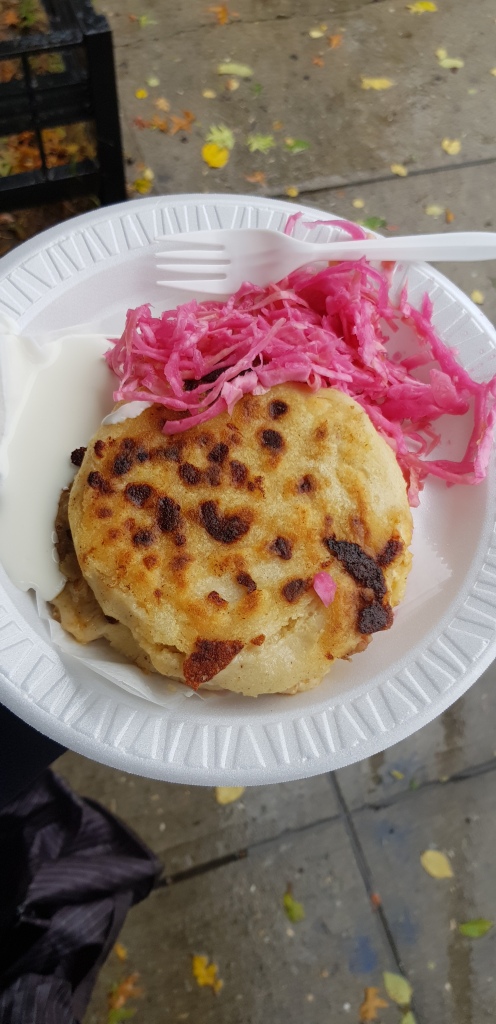
From the corner of my eye, I spotted the food truck which I was aiming to try for lunch that day – the Red Hook Food Vendors. I believe over the summer months, there may be even more food trucks. I made a beeline for a food truck that specialises in El Salvadorian pupusas.

Admittedly, I have never had pupusas before but I did have something similar elsewhere near Gowanus, Brooklyn, which was called arepas at a place called White Maize (and loved it). Therefore, I was pretty enthusiastic to give pupusas a try.

After ordering, I made some small talk with the abuelas manning the store and another customer with whatever little Spanish I knew (variations of muy delicioso). The purple coleslaw was a good counterbalance in terms of its acidity and sourness to the crispy, savoury pupusa, which was filled with meat. There was also a mildly sweet white sauce that went well with the whole consortium of flavours.

The perfect snack on a rainy day

I wolfed up every last bit of the pupusa and thanked the abuelas and continued deeper into Red Hook along Bay St. There was an IKEA up ahead, which was probably the reason most people ever do visit Red Hook and I was contemplating getting some meatballs. However, I decided to save the calories for something more unique to the neighbourhood for dinner later on and soldiered on despite the wind growing steadily stronger.

Red Hook’s IKEA

I turned the corner of Bay St into Columbus St and the entire area was devoid of people and appeared to be pretty run-down industrial buildings. I wondered if it was always this empty or it was because of the weather that made people opt to stay in for the day. The industrial buildings soon gave way to the large swathes of housing projects in the area, known as the Red Hook Houses.

When the Red Hook Houses were first unveiled in 1938, rent was only $6 a month and were hailed as a major milestone in the area of public housing. In 1940, First Lady Eleanor Roosevelt visited the Red Hook Houses and had positive remarks despite noting that the closets did not have doors.

This prosperity did not last, and along with most of New York City, was in dire straits in the 1980s and beyond. In the 1990s, Life Magazine called Red Hook the “crack capital of the USA”. I found another photo dating back to 1988, with one man carrying an Uzi sub-machine gun, which was apparently their go-to weapon at the time.

Two men, one of them carrying an Uzi submachine gun, sit on a stoop at the Red Hook Houses in Brooklyn, New York, April 1988. Dealers and lookouts often positioned themselves on stoops and in hallways at the housing project; the Uzi submachine gun was frequently the weapon of choice.
Credit: Al Jazeera, Eugene Richards

In recent years, the area does seem to have turned a corner in terms of crime, so I was okay with walking through these projects to get around.

https://streamable.com/1v8ys
https://streamable.com/rbwi4

I walked through most of the projects along Columbus St. uneventfully and wanted to cut across Coffrey Park to get to Van Brunt street on the other side. At this point, I spotted three guys on the other end of the park, heading in my direction. I decided to err on the side of caution and made a detour around the perimeter of the park instead since there was no one else in the vicinity and I was still in the heart of the housing projects.

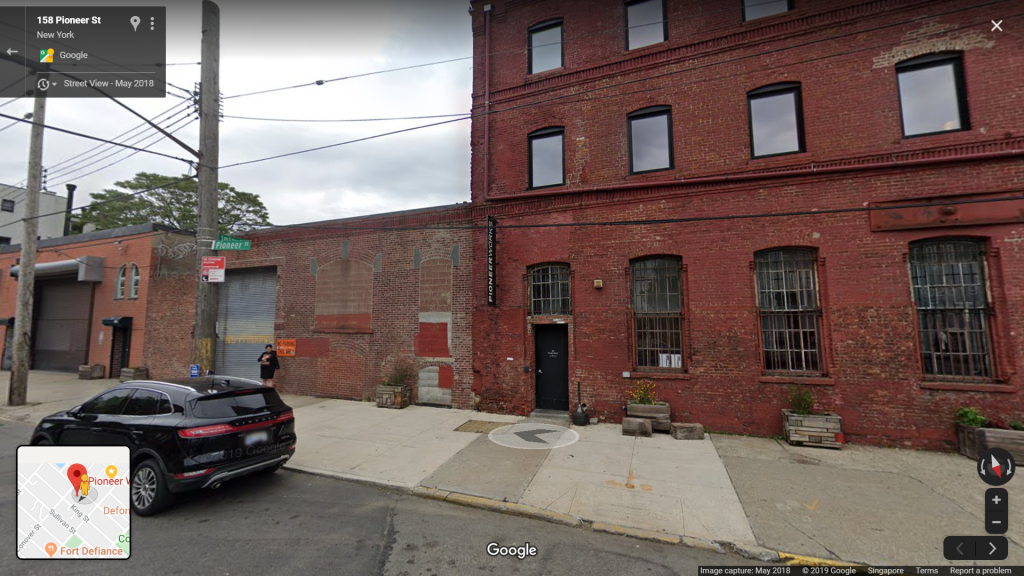
The rain was starting to pelt down and I was eager to get to my destination. To my relief, I spotted the sign stating ‘Pioneer Works’ and proceeded to head in.

Exterior of Pioneer Works

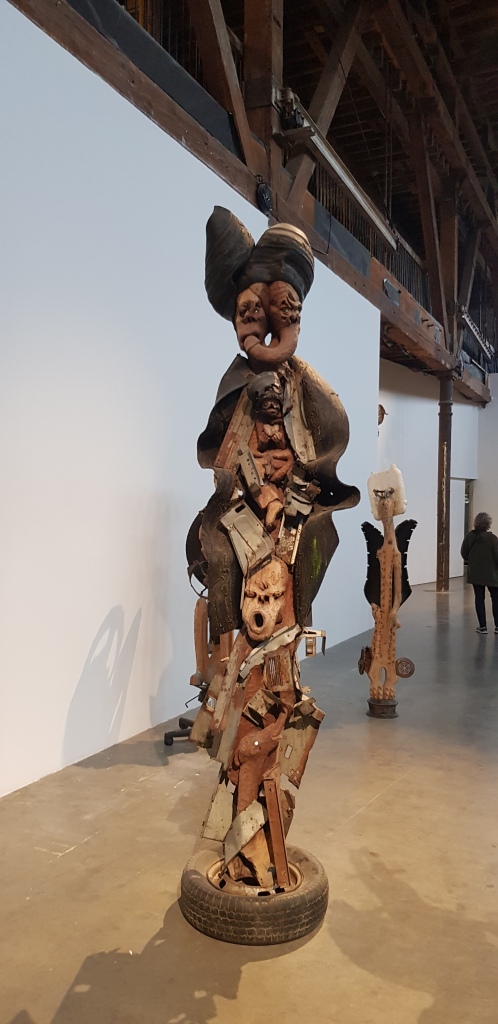
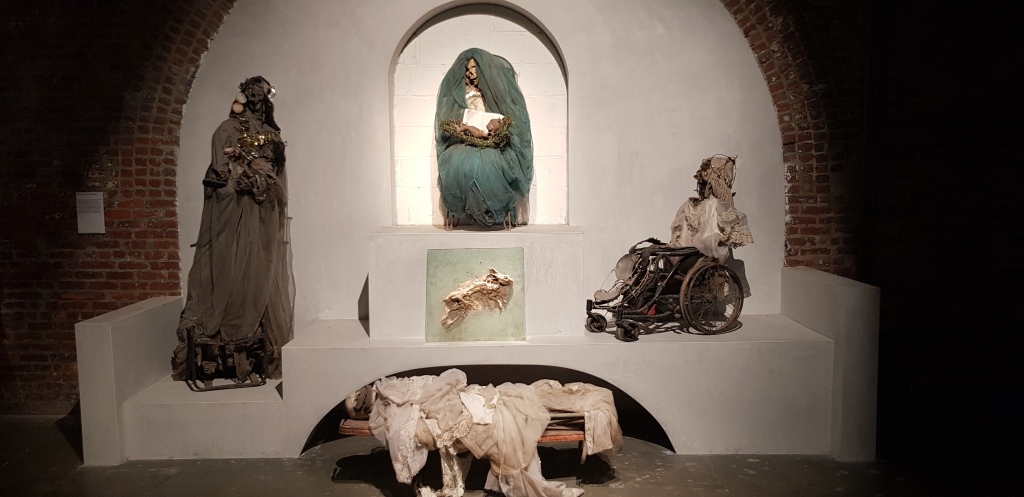
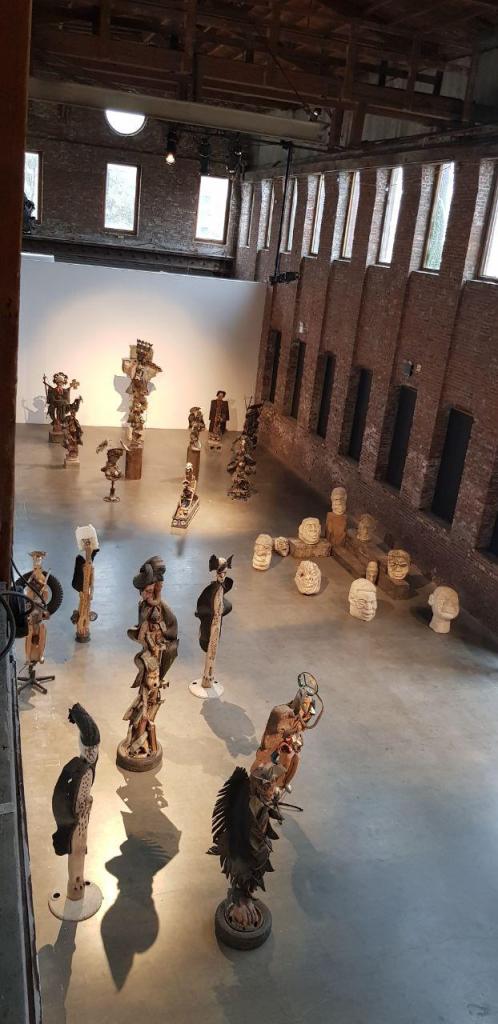
At the time I visited, Pioneer Works had an exhibit titled PÒTOPRENS, featuring Haitian artists and the capital of Haiti, Port-au-Prince. I was surprised that the space spanned three floors and was pretty colossal too.

With my limited understanding and memory of the exhibit, a lot of the Haitian artists used whatever materials were lying around to make these elaborate sculptures, with an assortment of metal parts, stone and wood carvings and Voodoo flags.

Some of the pieces at the beginning of the exhibit. For a better explanation of the exhibit, visit https://pioneerworks.org/exhibitions/potoprens/

Also, what was intriguing to me was that it was Haitian tradition to keep loved ones close by – even after death. Therefore, some of the sculptures used skulls of the artists’ relatives or family members.

Second floor view of the first floor exhibit
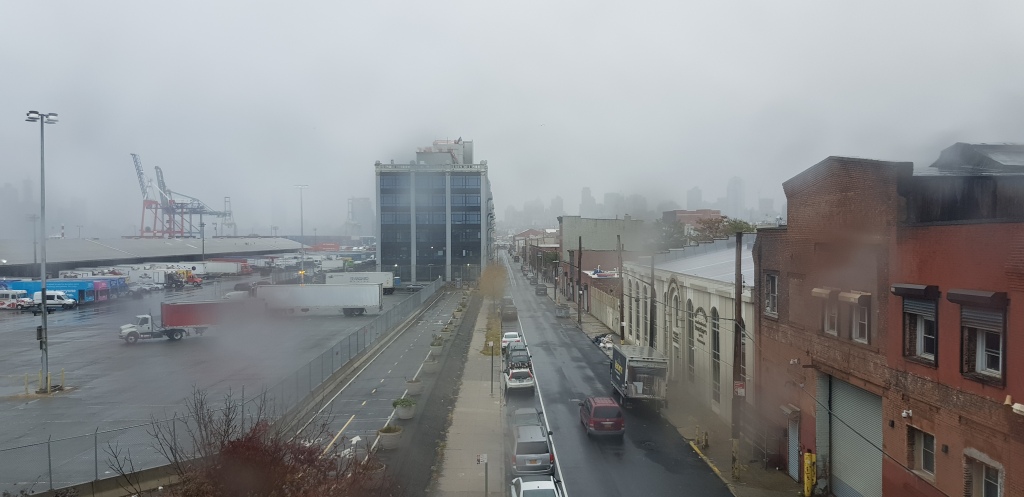
The exterior view of Pioneer Works on that damp rainy day.

The second floor featured a lot of photos featuring daily life of Port-au-Prince, including the LGBTQ nightlife. Some of these photos took me by surprise, as mental images of Haiti that outsiders often conjure up do not give justice to the vibrancy in these photos.

https://streamable.com/ja3g2

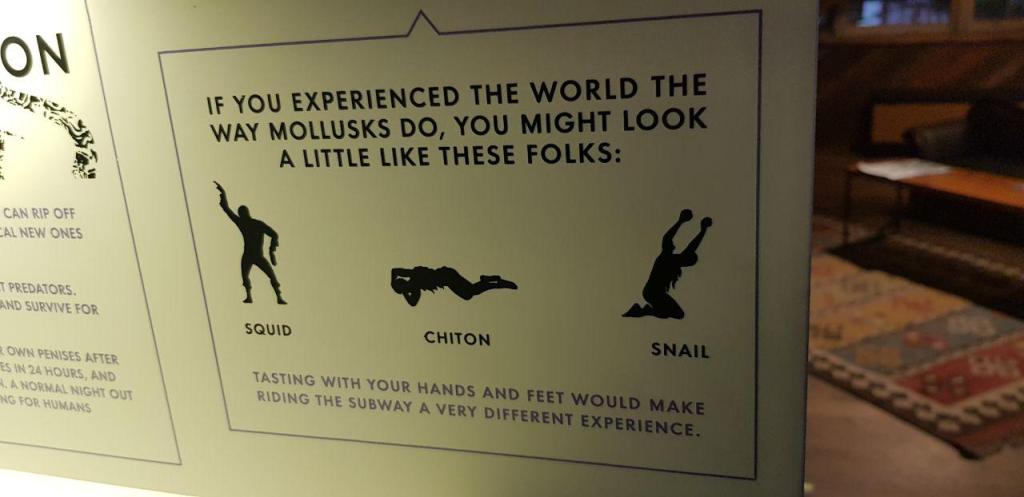
Also on the third floor, was the most random standalone information board – feauturing mollusks. There was also a mini theater featuring various videos and documentaries of life in Haiti which were interesting to watch.

Part of the mollusk information board. Must be the most out of place object here but a welcome one since I like reading about anything nature-related.

I stayed behind to listen to a talk by some distinguished members of the Pioneer Works community and some invited artists but fatigue was already getting to me and sadly, I don’t remember much about the talk, other than an African American artist who would punctuate parts of her speech with Haitian songs and verses – her voice was really good.

Subsequently, it was time to grab dinner in the area and I knew just the place that would satiate my hunger. I emerged into the cold of the night and to my dismay, it was still raining. I turned the corner of Van Brunt Street and saw my dinner spot – Red Hook Lobster Pound.

The interior was similar to that of a sports bar, with Red Hook paraphernalia lining the walls. I was pretty ravenous so I ordered one of their signature lobster rolls along with a key lime pie.

https://streamable.com/s7l42
Red Hook Lobster Pound’s signature lobster roll

I think they hit the mark on balancing the mayo-to-lobster ratio, although I wish the butter on the toast was more pronounced. The dash of green onions on top was also refreshing to bite into.

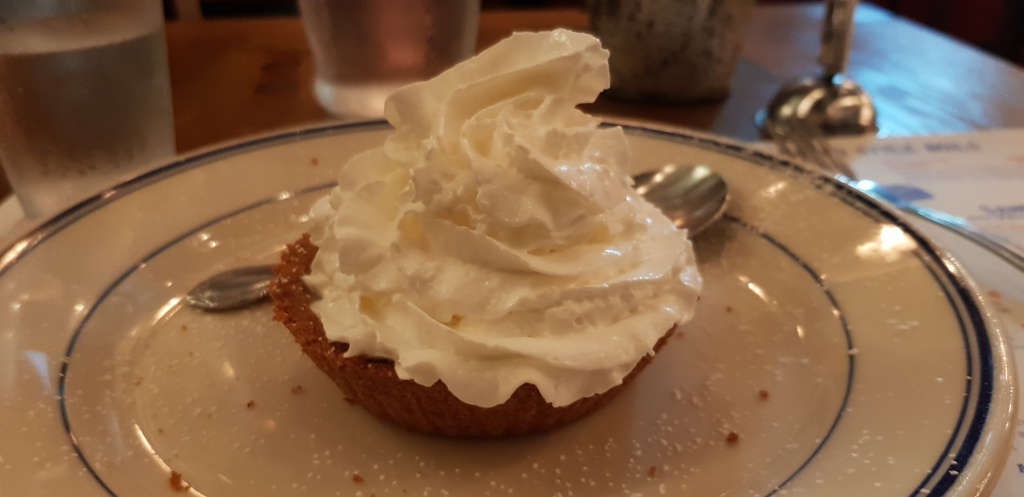
Key Lime Pie

I haven’t had many key lime pies since I’m usually not a fan of sour food in general, but found this to be all right in terms of its sourness, although the overall taste to me was nothing to write home about. Again, I am no connoisseur of key lime pies, might be worth a shot if you’re ever in the area.

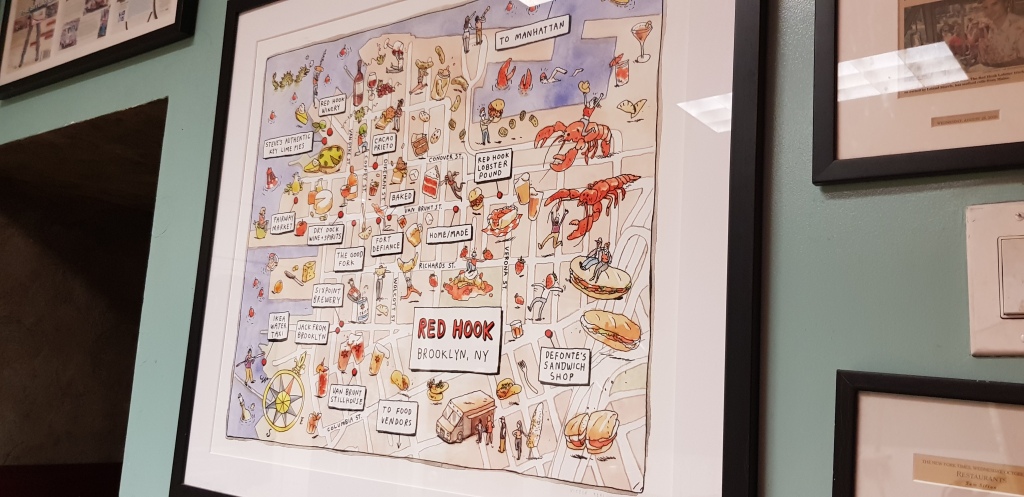
A map of the main restaurants around Red Hook. Unfortunately, this was my first and only time in Red Hook, although there were a few places that I still wanted to check out.

Red Hook is one of the least accessible neighbourhoods in Brooklyn as there is no subway stop nearby. As I exited Red Hook Lobster Pound, the bus to the nearest subway stop raced to the bus stop just in front of me. Faced with the prospect of waiting in the rain for more than half an hour for the next bus (with no shelter), I decided to walk it out, even though it meant having to cross the Red Hook Houses again.

Red Hook Houses at night

The streets were rather dimly lit, with hardly a soul in sight. As I reached Columbus Street again, the winds picked up and ruined one guy’s umbrella. Angrily, he tossed it on the ground and stomped away. I made sure to keep some distance between him and me.

After what felt like an eternity, I finally reached the subway station and snapped one final photo of the area (and it was still raining).

That ends my day in Red Hook – the next post will likely be about the (in)famous Brownsville neighbourhood, which has the reputation of being the murder capital of NYC.

Morrisania, South Bronx (Part 2)

Seeing a different angle of NYC from the least explored borough

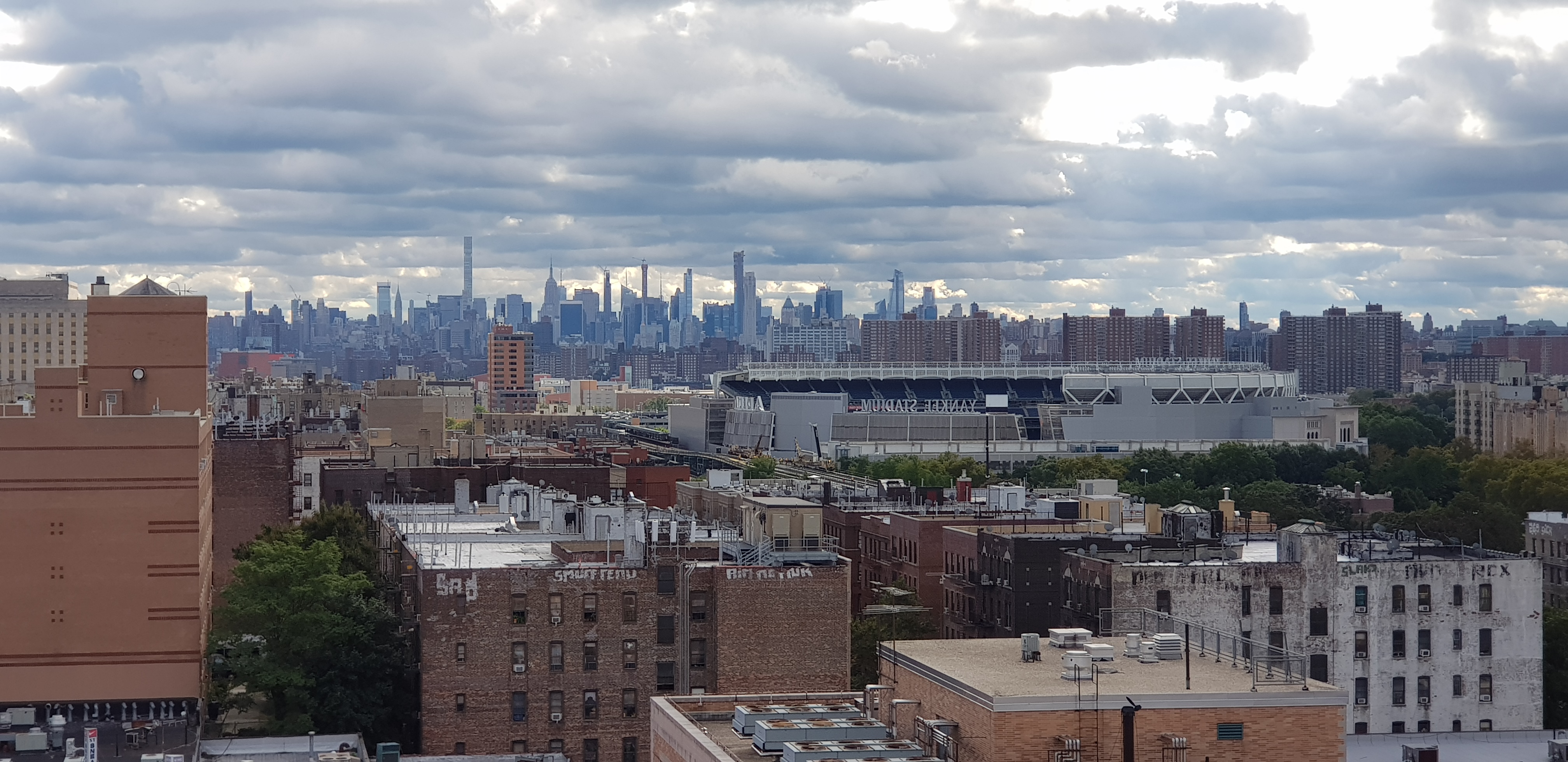
Following the previous post, we took a fairly clean elevator and after the WHEDco staff unlocked a door, we emerged to see one of the most spectacular views of New York City, one that is likely that very few tourists have ever seen.

We were pretty awestruck by the view, but started musing how the area would be like at night. I jokingly said that the likelihood of hearing gunshots if we stayed overnight would be fairly high, although on hindsight, this area of South Bronx is definitely not the worst (maybe Soundview?).

Soon, the WHEDco staff was ushering us indoors and we reluctantly bade farewell to the view. However, the tour was far from over.

We headed back downstairs to another part of WHEDco, which is the kitchen area.

This is just one corner of the kitchen area, it was actually pretty huge.

What WHEDco does is that they help small food business owners get started by providing them large-scale kitchen amenities at a nominal monthly fee in the low hundreds. I recall one of the vendors was making hundreds of tamales here before delivering them to restaurants around New York City.

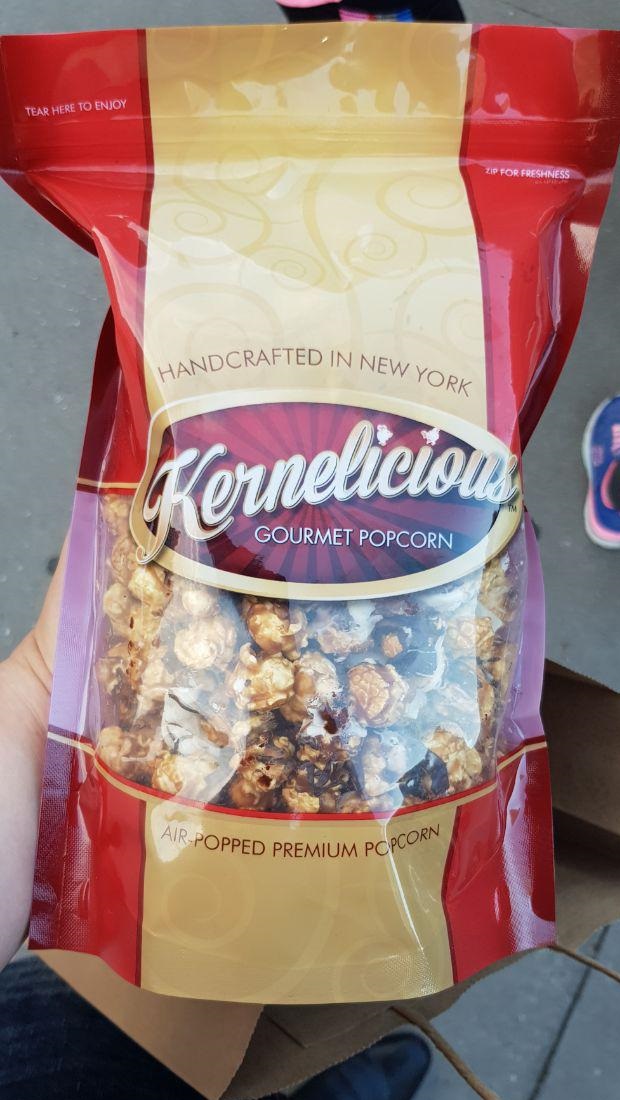
In a serendipitous turn of events, during my first trip to the Bronx to the Bronx Night Market at Fordham, I bought some delicious white and dark chocolate coated popcorn from a booth called Kernelicious, and later on, I found out that he was actually preparing his popcorn from the kitchen here at WHEDco. He was extremely nice and I told him I was from Singapore, where Garrett Popcorn is fairly popular, and he said he’ll be coming to take their market share soon and we both shared a laugh. His popcorn is really good (I got the premium white and dark chocolate flavour for $7 but there are many other flavours – you can’t stop eating once you start).

Really delicious popcorn and the owner is an awesome guy, definitely worth splurging on this if you come across their booth in the Bronx Night Market.

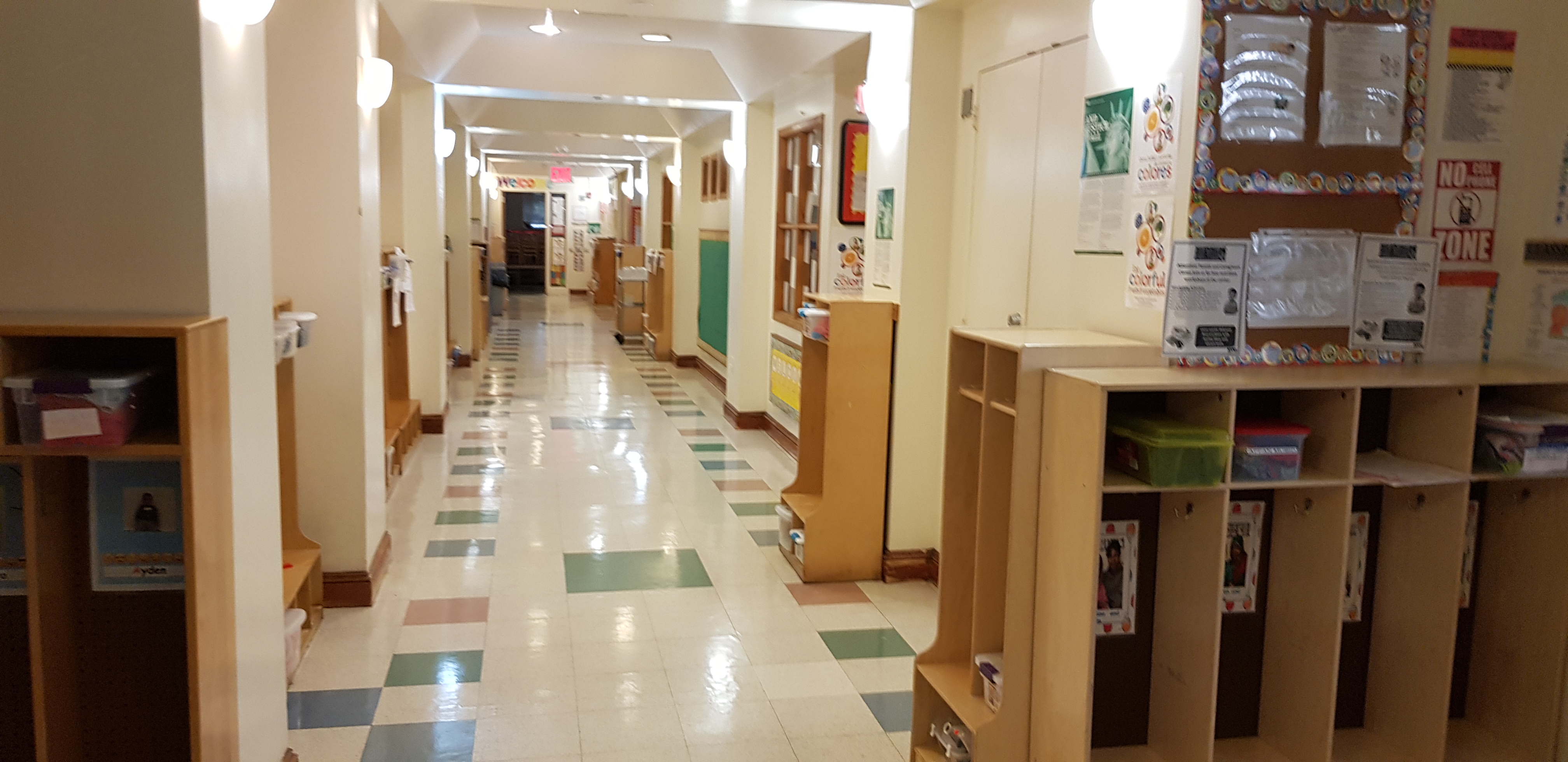
The last part of the tour was showing a pre-school/nursery area within the WHEDco premises.

Very well-lit for a basement level nursery. There were a lot of art drawings lining the walls, and a lot of photos of happy kids.

One of the classrooms. It seemed even better well-stocked, clean and well-maintained than most nurseries I have seen in Singapore

I also asked the WHEDco staff what was the student to teacher ratio here, I believe it was 1:10, which seems like a good ratio. I stayed behind a little to chat with one of the teachers and she said that after-school programs were especially important here to make sure that kids are brought up with the right values and they do not fall into bad company easily from a young age. I complimented the premises and that they were even better than those I have seen in Singapore and said the kids seem to be in very good hands, which made her beam and she clasped my hand tightly and thanked me.

With that, the tour of the WHEDco building came to an end and we soon exited. As much as I wanted to explore the area more after seeing this hidden gem, I had a prior appointment with another friend to meet at the Queens Night Market, which was around 1.5 hours in the Corona neighbourhood of Queens. Arby and Gregor were going to head downtown to grab a burger from a place in the Upper East Side and as much as I wanted to join them, I wanted to make sure I had enough ‘space’ for the food at the Queens Night Market.

We made our way back to the 167 St. subway station, only to find that there were no downtown trains! Instead, we had to take the 4 train uptown to Burnside Avenue (between 179th and 180th street) in the Morris Heights neighbourhood or walk down to 149 Street Grand Concourse, which was in the Melrose neighbourhood. Even though I was keen on walking to explore the area more, my companions did not share my enthusiasm and we decided it would be safer to stick to the subway.

Again, the subway was packed with people and when we got off at Burnside Avenue, the platform was pretty packed with people. I made the call for us to walk to the end of the platform where there it was less crowded (something I usually do in Singapore too).

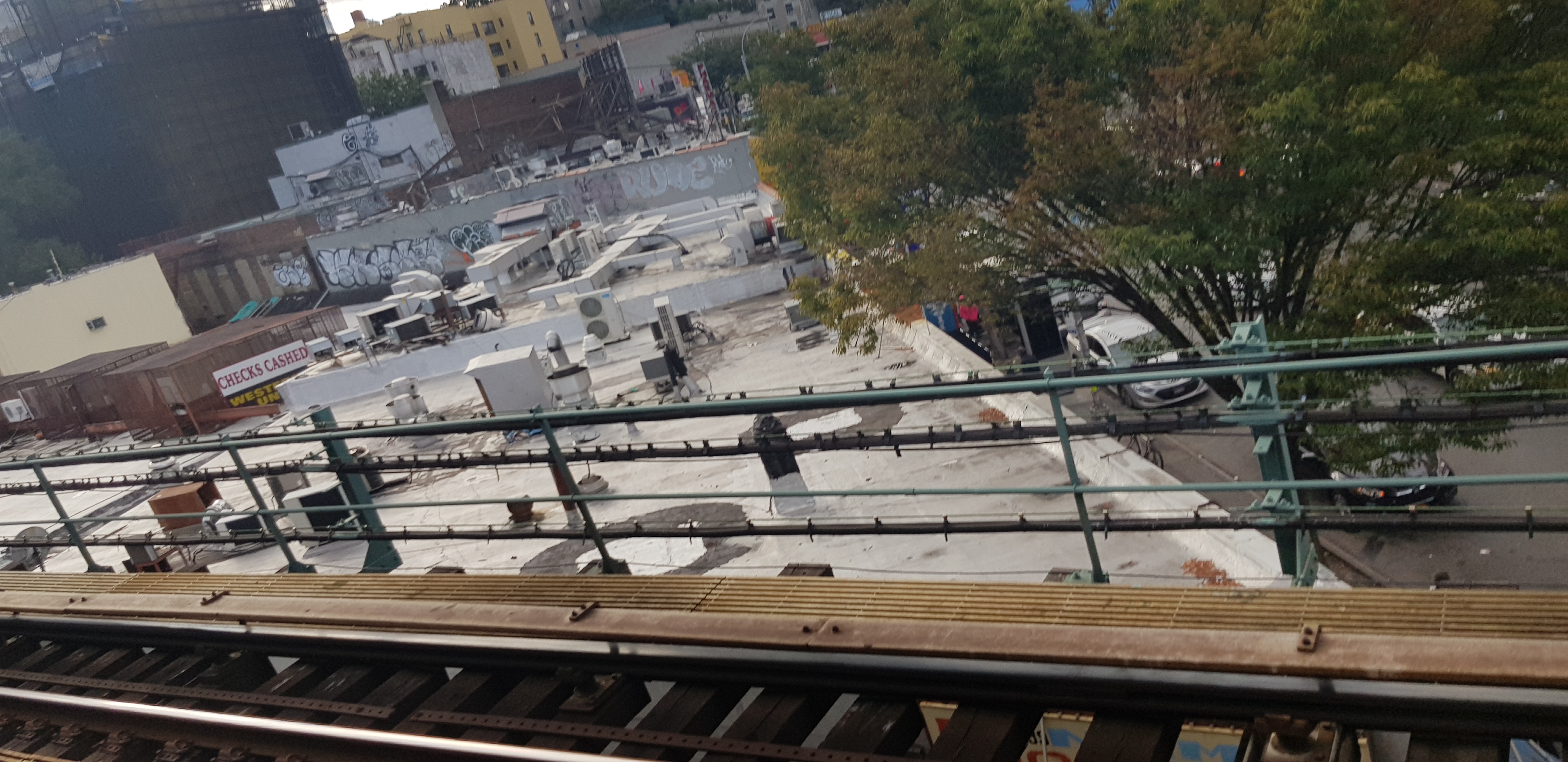
Random shot of the subway platform area at Burnside Avenue

Most of the strap-hangers waiting at the platform were Latin Americans and African Americans, and I wondered which part of the city they were all headed to, since I did not anticipate that it would be this crowded in the Bronx. We stood out like a sore thumb but again, no one really paid us much attention.

I believe we waited for almost an hour here, which was excruciating long just for a subway but the subway finally came. The duo got off somewhere in the Upper East Side and I made my way to 42 St. to transfer to the 7 train to get to Corona. The Queens Night Market was okay but not impressionable enough for me to feature in a post, but I will feature Corona and one particularly memorable dish I had there during my final weeks in New York.

This concludes my post for just ONE half-day of my New York travels, and there are tons more adventures that I need to get around to writing, including the real Little Italy in the Bronx. I stayed in Chinatown/Manhattan’s Little Italy while I was there, but I only ate at a somewhat authentic Italian restaurant there once, as I always walked by many tourist traps masquerading as restaurants, with touts outside. However, for the next post, I may feature a Brooklyn neighbourhood instead, so stay tuned!

If you’ve read up till this point, thank you for reading till the end! I was thinking of doing some good with this blog since I visited many blighted areas in New York, and decided to see how a Patreon would work out, where donors can make a one-time donation and I will consolidate the donations and send them to a nonprofit based in New York.

Read more about it at: https://www.patreon.com/nytravelswinston

Morrisania, South Bronx (Part 1)

Seeing a different angle of NYC from the least explored borough

Following our departure from East Harlem’s 110th St. station on the 6 train, we got off at the 125th St. station and transferred to the 4 train. It was my first time taking the subway to the Bronx (I had taken the Metro-North train to Fordham station the very first time) and it was surprisingly crowded for an uptown train.

We quietly made jokes in a corner of the train about having to run to our destination as soon as we reached our stop at 167 St. station. The train emerged from the underground depths as it reached Mott Haven, a neighbourhood that once had a reputation that can only be rivalled by the likes of Brownsville, although I read that South Bronx is starting to gentrify with busloads of tourists visiting the birthplace of hip-hop.

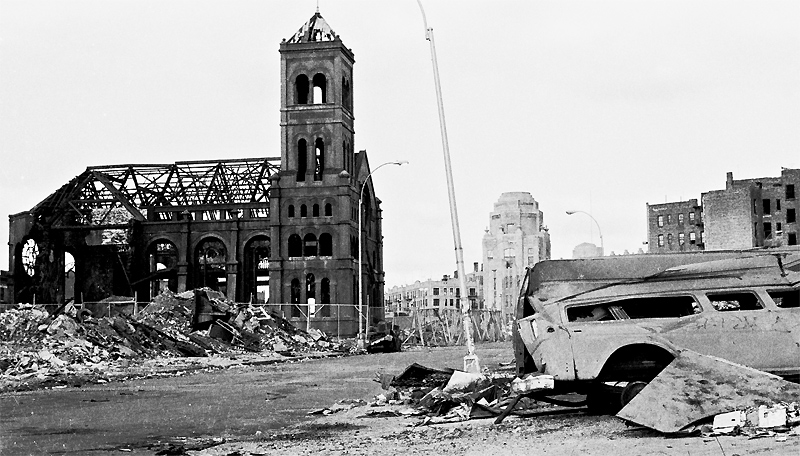
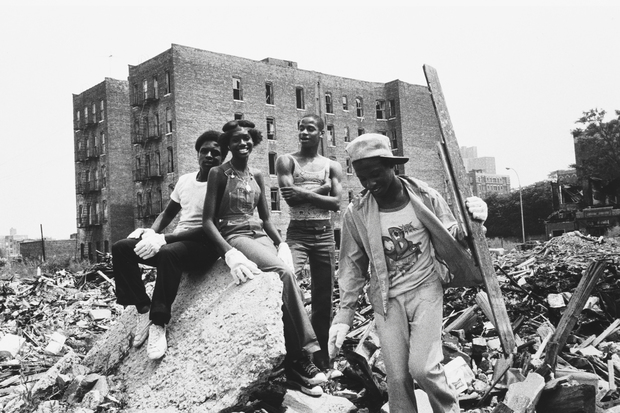
The Bronx, especially South Bronx, used to look like a war zone in the late 20th century. Primarily, this was due to aggressive rent control policies that made it impossible for landlords to make any money from renting out their apartments to current tenants. As a result, the only feasible way out for them was arson, to claim insurance for their apartments and to ensure new tenants move in, so that they can charge current rates.

Syria? Nah, it’s actually South Bronx in 1980. Source: https://www.trekearth.com/gallery/North_America/United_States/Northeast/New_York/New_York_City/photo282502.htm

Back to the present, there were people attempting to enter the subway while others were trying to alight from the tightly packed subway, resulting in one guy declaring that he’s going to punch the next person who gets in before letting people alight first (something that I silently supported), and I recall he almost was ready to fight another person who wanted to pick a fight with him. At this point, I was beginning to doubt whether it was a good idea to take the subway in the end.

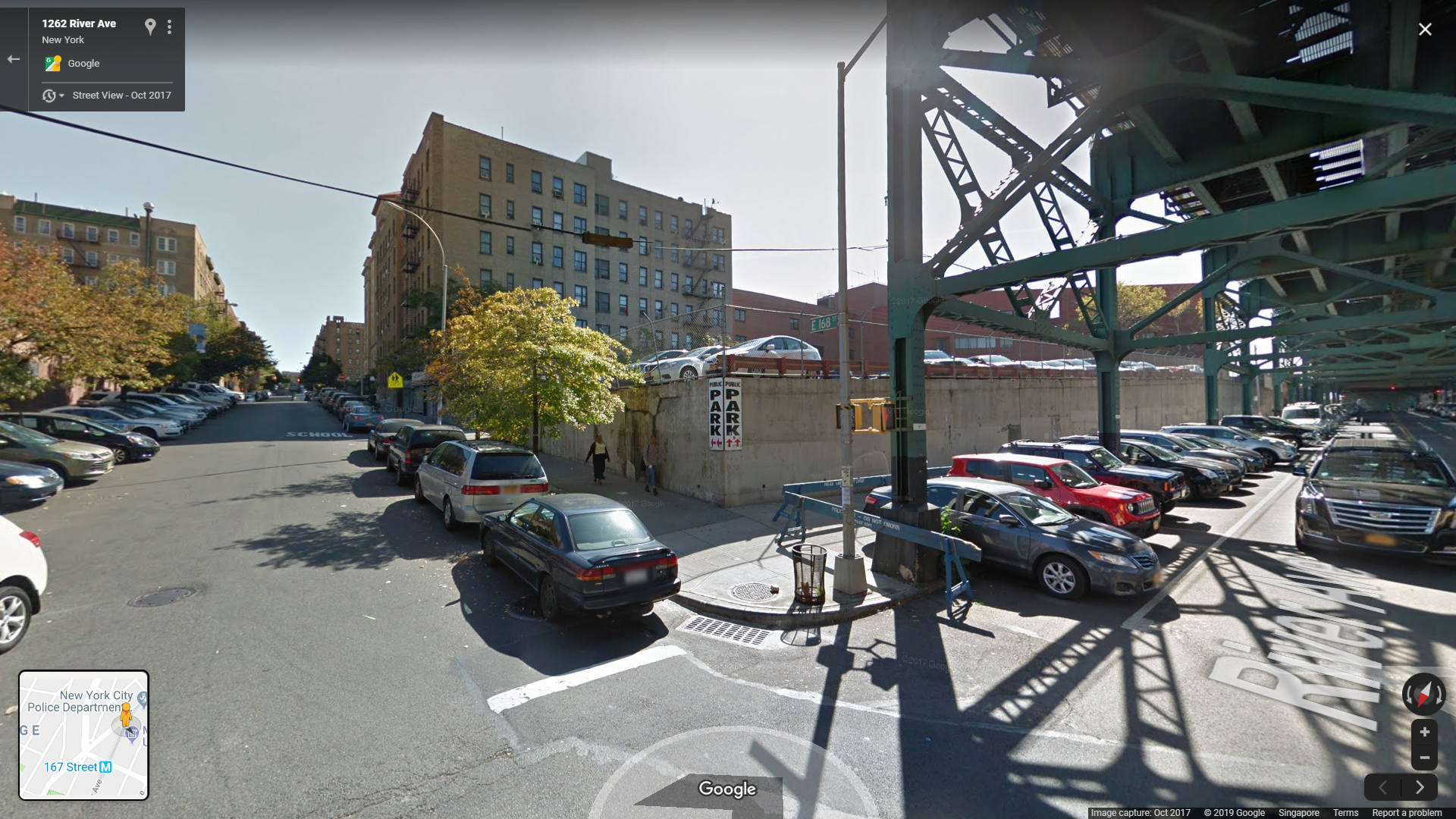
Luckily, we reached our stop without any issue at 167 St. station, located in the Morrisania neighbourhood. It was an outdoors station, so we made our way downstairs to the station exit area. There was an MTA staff member standing guard by the emergency exit, possibly to deter fare evaders which I guess might be a more pervasive problem there.

As we exited the station, there was a Baskin Robbins ice cream parlour downstairs, and Gregor grabbed a quick coffee while Arby and I surveyed the area outside. Despite Morrisania being known as a pretty ghetto neighbourhood, the area around us seemed fine enough with everyone going about their own business. Even so, I decided to limit my photo-taking out in the open, just in case.

I recall we walked around a bit but the area we were walking in seemed pretty sketchy, so we did not linger around and decided to head back towards the destination.

The area we were walking in before we turned back. Something about the overhead subway casting a huge shadow underneath it seems to make people feel slightly unsettling..

As we reached the destination, there was a member of the Open House New York waiting there, and told us the next tour would be in a bit. Apart from the three of us, no one else arrived after us and I took the opportunity to finish up the remainder of my take-away lunch from A Taste of Seafood (which still tasted good albeit slightly cold) on the steps of the building.

We chilled on the steps together while they (im)patiently waited for me to finish up my lunch

Soon, the OHNY staff called out to us and said they were going to start, and I hastily gulped the remainder of the lunch down, vowing to go back to A Taste of Seafood if I was ever in the area again. We made our way to the basement entrance and saw there were a few others already waiting there, although it seems like most people had not bothered venturing into the Bronx for this weekend (Most other OHNY places in Brooklyn and Manhattan were fully booked with snaking queues).

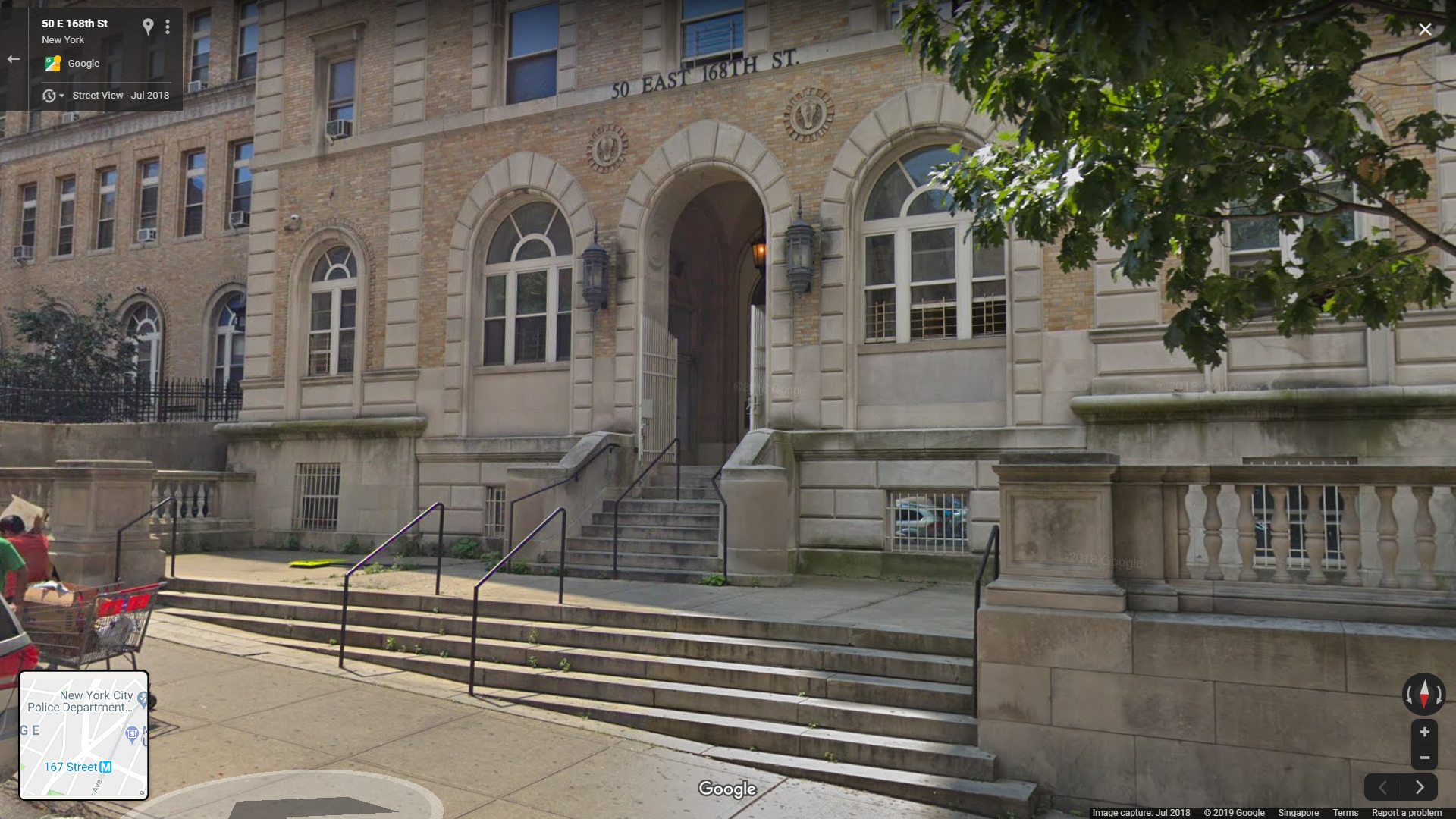
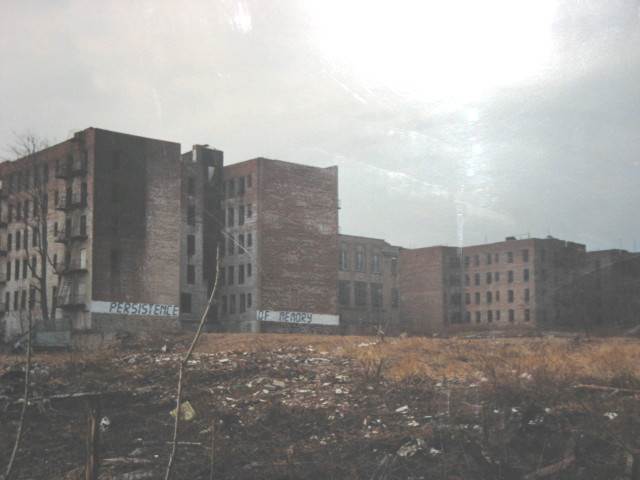
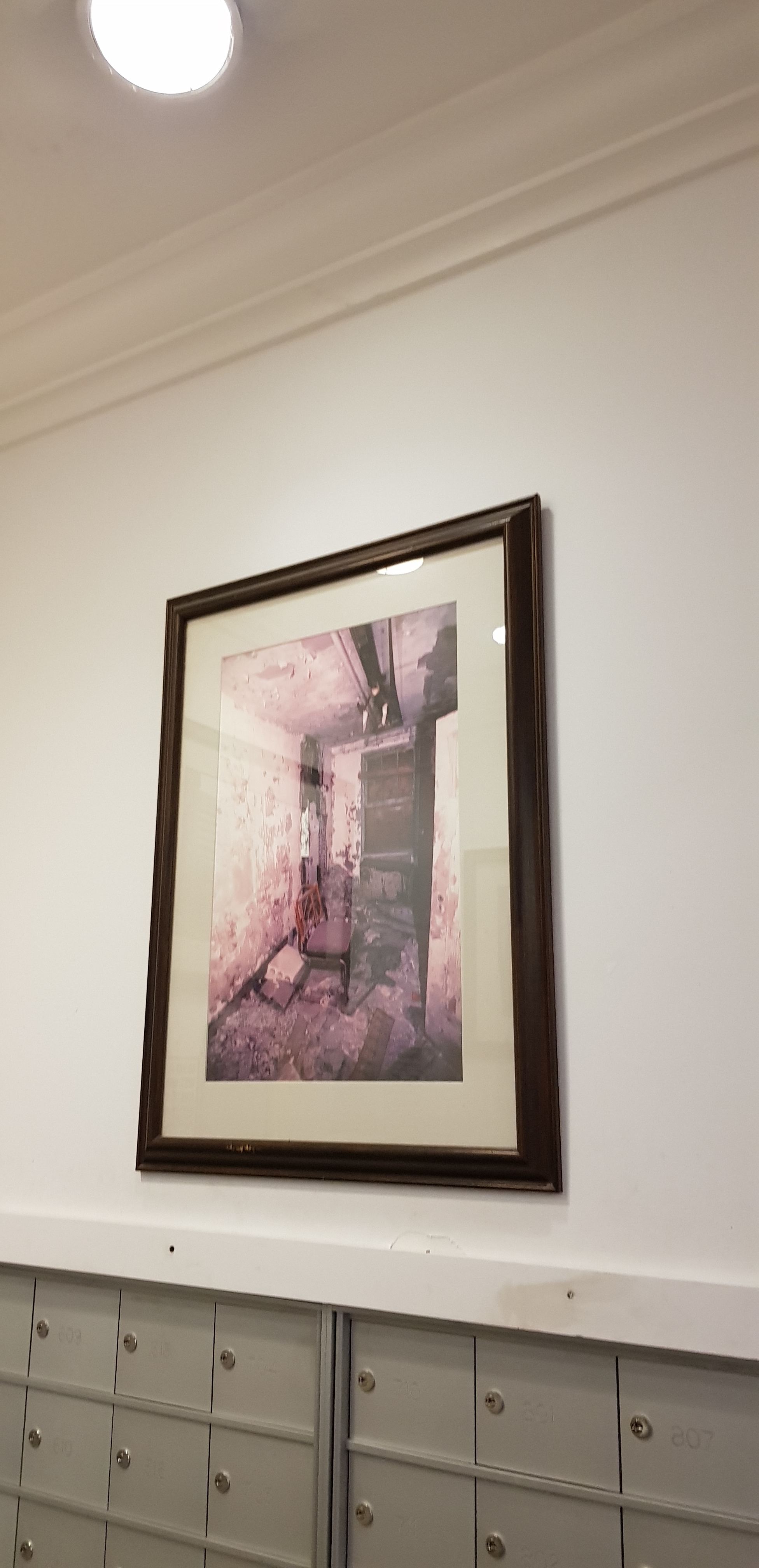
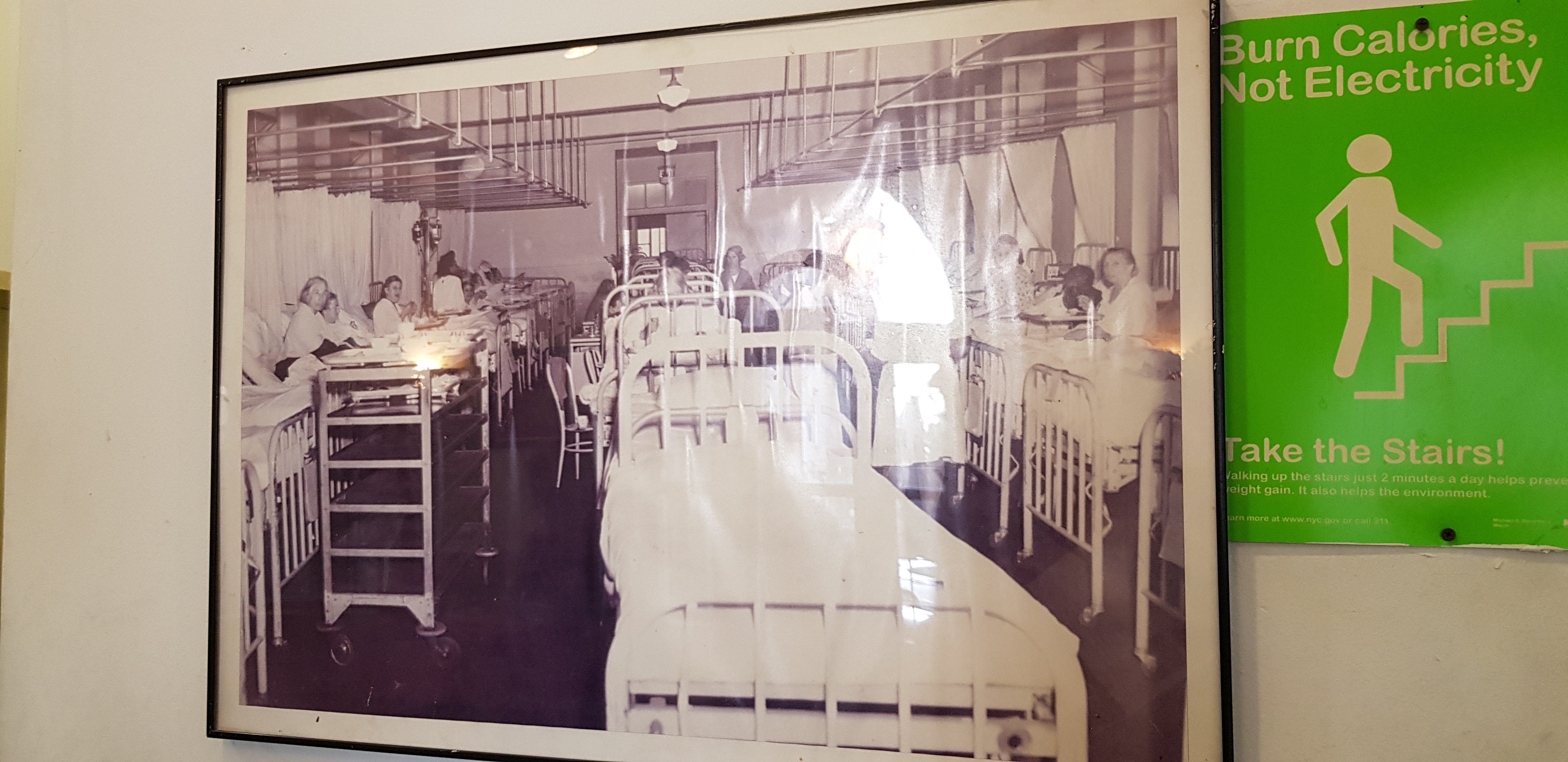
The tour began soon after, and we were soon introduced to the history of the building. It is currently known as the Women’s Housing and Economic Development Corporation (WHEDco), but it was known as the Morrisania Hospital, which operated from 1926 – 1976, before it was abandoned for two decades and subsequently awarded to WHEDco.

Persistence of Memory – Source: WHEDco. Located in the South Bronx, I could only find a similar photo of a sculpture by John Fekner, dating back to 1992, in front of the building.
A room in the old Morrisania Hospital when it was abandoned, although I can’t remember the exact year it was taken.
The surrounding roads of the old Morrisania Hospital
Patients of the old Morrisania Hospital

After a brief introduction of the history of the building, we were about to take the elevator to the ninth floor to take in the breath-taking view of New York City. To my knowledge, there are no rooftop bars (at least in South Bronx) in the area, so this would be a rare sight, to be able to see the Yankee Stadium and other skyscrapers that are part of the Manhattan skyline from this angle (the photo of the blog’s cover page is one of the photos I took from here).

Probably my most favourite photo from my entire time in NYC.

I will share short videos and more photos of the view in the next post!

My first foray into East Harlem (Part 3) – 13.10.2018

Trash to Treasures
in East Harlem

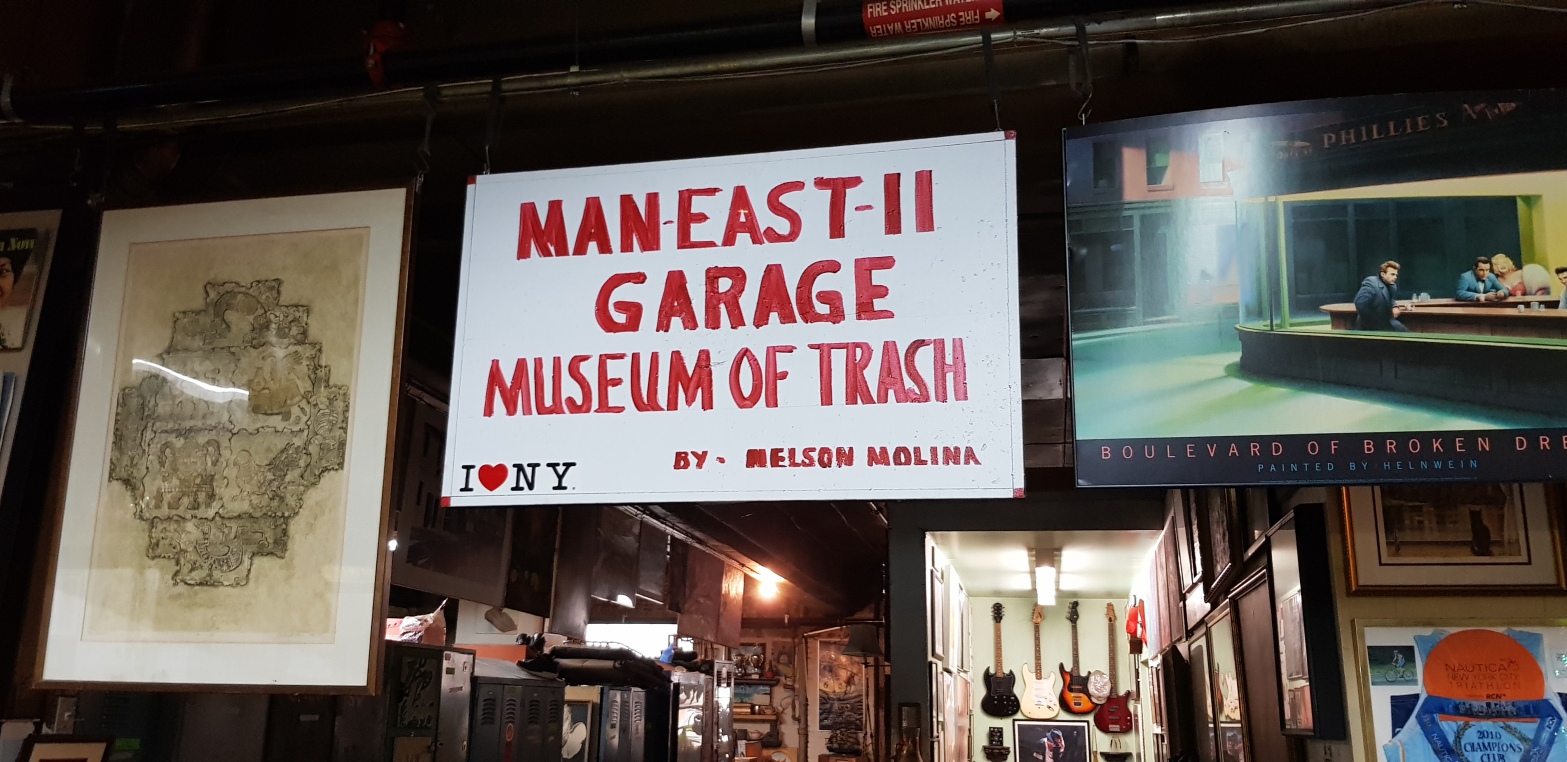
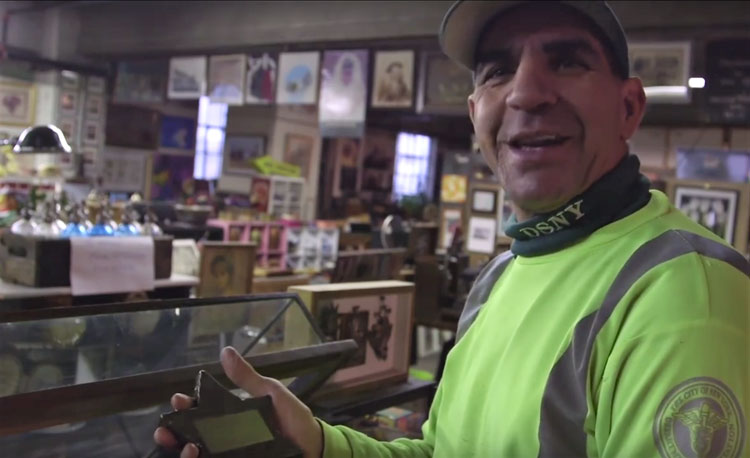
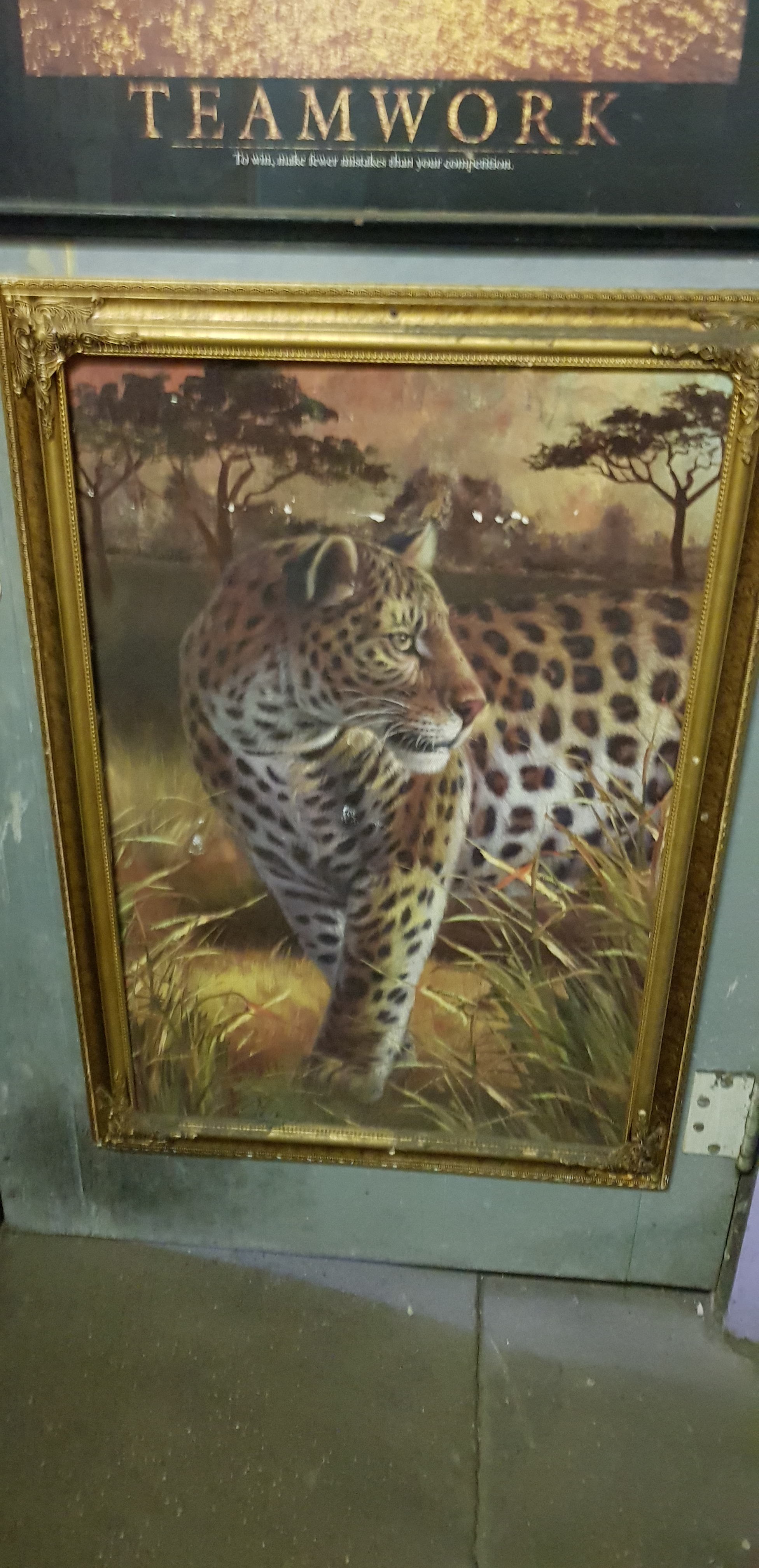
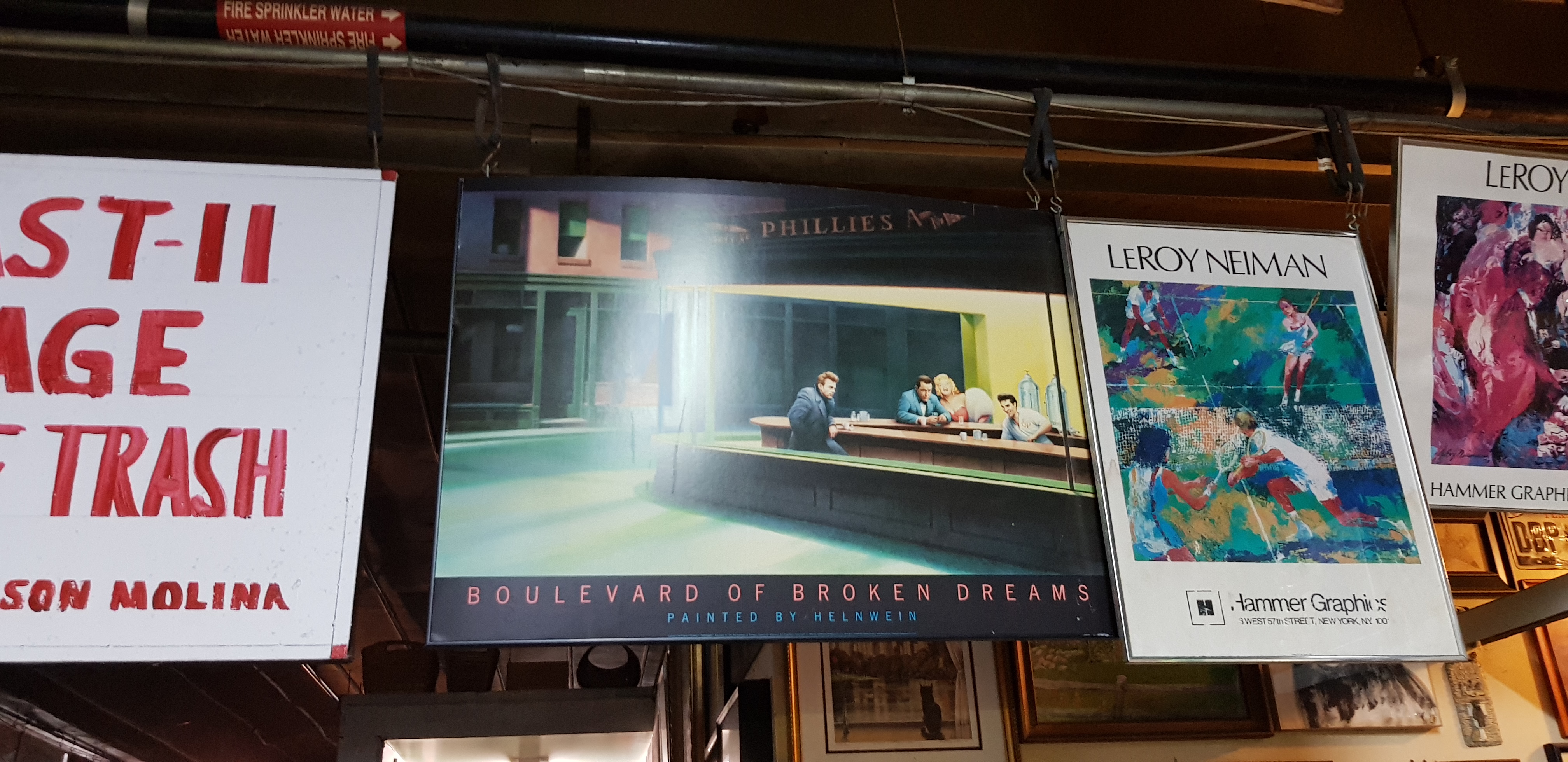
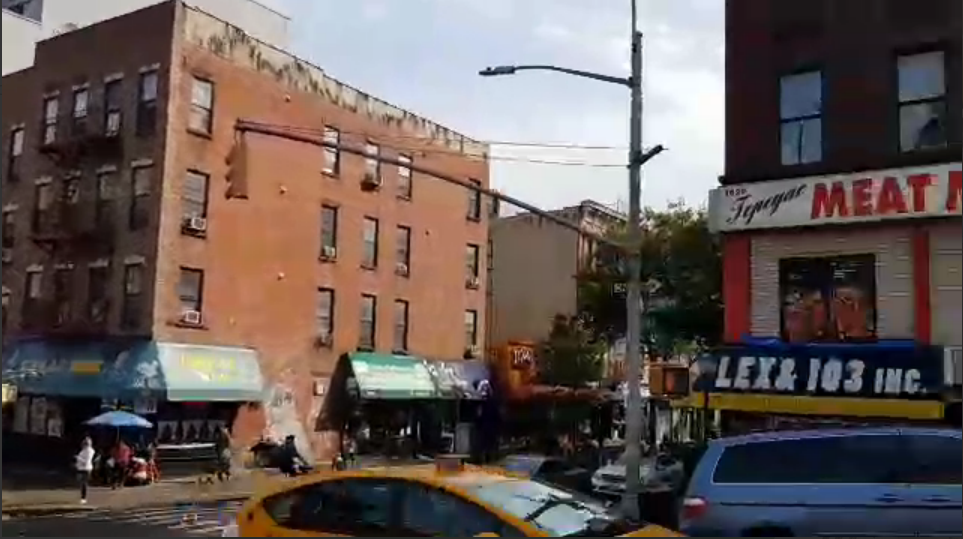
In this part, I will wrap up the first destination of the day. As previously written in the first two parts, Molina takes the time to curate his collection, dividing them into different aisles and sections. The cover photo for this part above shows different memorabilia and photos, they seem to be taken at the turn of the 20th century or so.

Makes you wonder about the stories behind each photograph eh?
Did a quick search on the Operation Sunhat pamphlet – took place in 1945.

There were a few other sections that were pretty interesting, spread around the space.

Possibly one of the biggest troll baby doll collections? Hard to imagine that people fancied playing with them in the 90s..
The Asian aisle
Some animal figurines next to..a portrait of the Twilight cast?
A plethora of men’s accessories. Look at that tie bar collection..
Really cool bracelet, but I think my mum would not be as thrilled to have another snake memorabilia at home (I have a cobra statue from Chennai, India and she’s terrified of it)
Bill Clinton cheering on his wife (but alas, to no avail)
Bunch of Swiss army blades and a random knuckle duster
Molina’s collection is valued at $160,000
Remember this star from the previous post? The words read: Star of David made from the steel of one of the twin towers. This happens to be Molina’s favourite piece out of his staggering collection too.

One of the main highlights of the Museum of Trash is a Star of David that was made from the remnants of the melted steel from one of the two towers from the tragedy of 9/11. It was in remembrance of a victim, and Molina found it almost a decade ago.

I did some digging to find more information about this piece in particular and apparently the original owner said it was accidentally disposed and will soon be placed in the 9/11 Memorial Museum in Lower Manhattan instead.

The Museum of Trash was one of the most memorable places I visited in New York, in a section of East Harlem that most New Yorkers have likely not ventured into. Sadly, this collection is set to move in the next couple of years from this current location, and continuing to rent a building to store this collection is highly expensive (no thanks to growing gentrification in East Harlem).

I lingered on for as long as I could, exploring every inch of the space as much as I could. But I had to keep to a tight schedule as I had to get my own lunch in the area before meeting up with two other friends to head even further northwards.

I reluctantly headed downstairs again and snapped one last photo of the stairway before emerging out into the crisp, autumn air once again.

Farewell for now!

The streets were still fairly quiet even though it was just past 1.00pm in the afternoon. A quick check on how to get to my lunch venue showed that I had to walk through the George Washington Housing Projects to get there quickly. They looked safe enough to walk through on my way here so I decided to briskly walk through the area while keeping a close eye on my surroundings

Despite being close to one of Manhattan’s richest neighbourhoods (Upper East Side), East Harlem or El Barrio is known to many as a no-go zone, with shootings still being a fairly common occurrence, especially at night. Moreover, East Harlem has one of the highest densities of public housing projects (usually synonymous with high crime, drugs and shootings) in the whole of America, second only to Brownsville, Brooklyn, which has the nickname of the murder capital of New York (I will feature Brownsville in a later post).

East Harlem, Manhattan, NYC. Many of those high-rise brick buildings are housing projects.
Source: Wikipedia

On another note, I was curious why there was so much stigma surrounding this neighbourhood, as I was usually met with raised eyebrows when someone asked me if I had a favourite Manhattan neighbourhood and I would reply nonchalantly, “East Harlem”. I just finished reading a book called In Search of Respect by an anthropologist, Philippe Bourgois, who spent several years befriending the locals in East Harlem in the 1990s when it was a haven for crack cocaine, and he explored many sociological factors that kept the denizens of East Harlem in a cycle of violence, drugs and poverty.

Definitely a more interesting line of work being an anthropologist

As I walked through the Carver Houses (another name for the George Washington Housing Projects – not exactly a name that evokes warmth and friendliness), the area was surprisingly quiet and well-maintained. I took a quick video of the surrounding area in the middle of the projects.

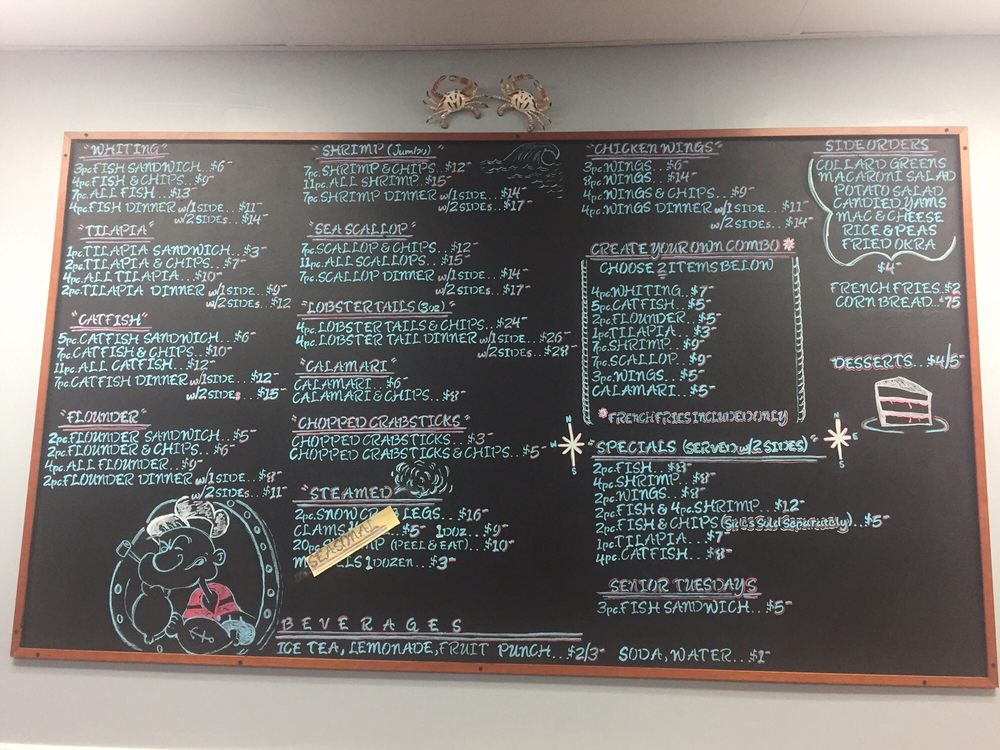
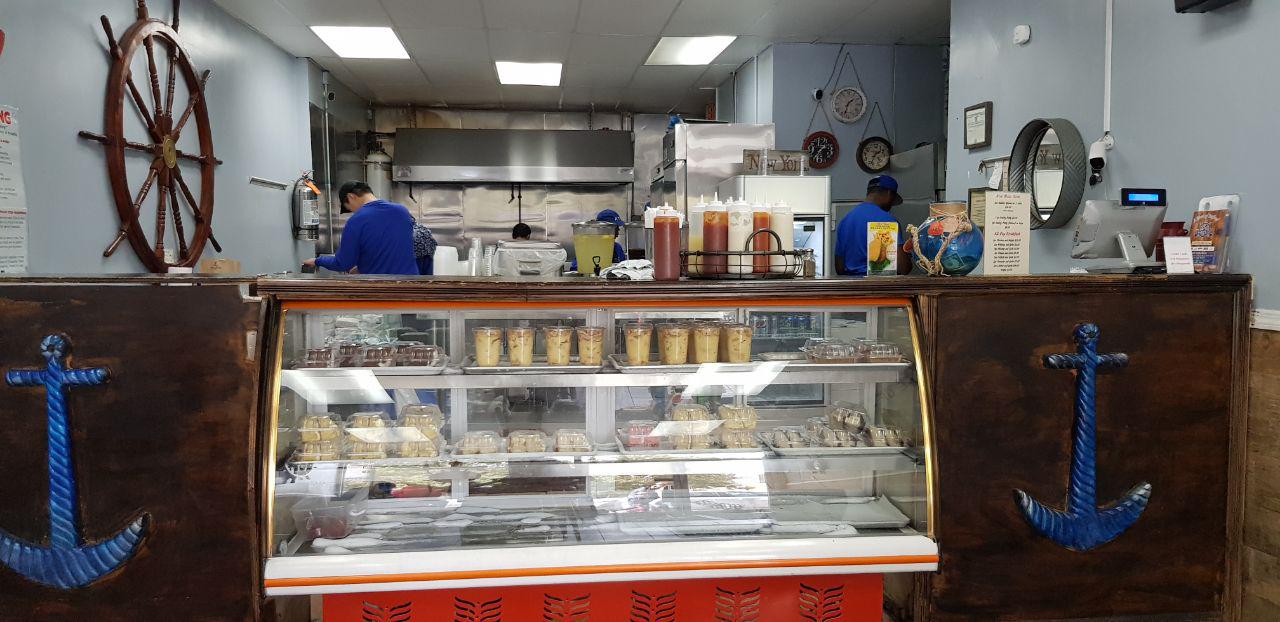
I made my way through to the end of the projects without any problems and finally got to my lunch venue, a place called A Taste of Seafood, along 3rd avenue. The aroma of freshly battered and fried seafood wafted into my nostrils as I opened the doors of the eatery. There were a few tables strewn around, and were already mostly occupied by African and Latin American families.

Very value for money deals, only Chinatown and maybe Washington Heights would have food at these prices.
Order counter at the front of the eatery.

Initially, there was an African American woman in her fifties at the cashier and I stepped up to greet her a good afternoon. She held up the palm of her hand, signalling me to wait, and got the Asian guy in the left side of the room to get my order instead. Maybe some previous Asian customers pissed her off in some way…

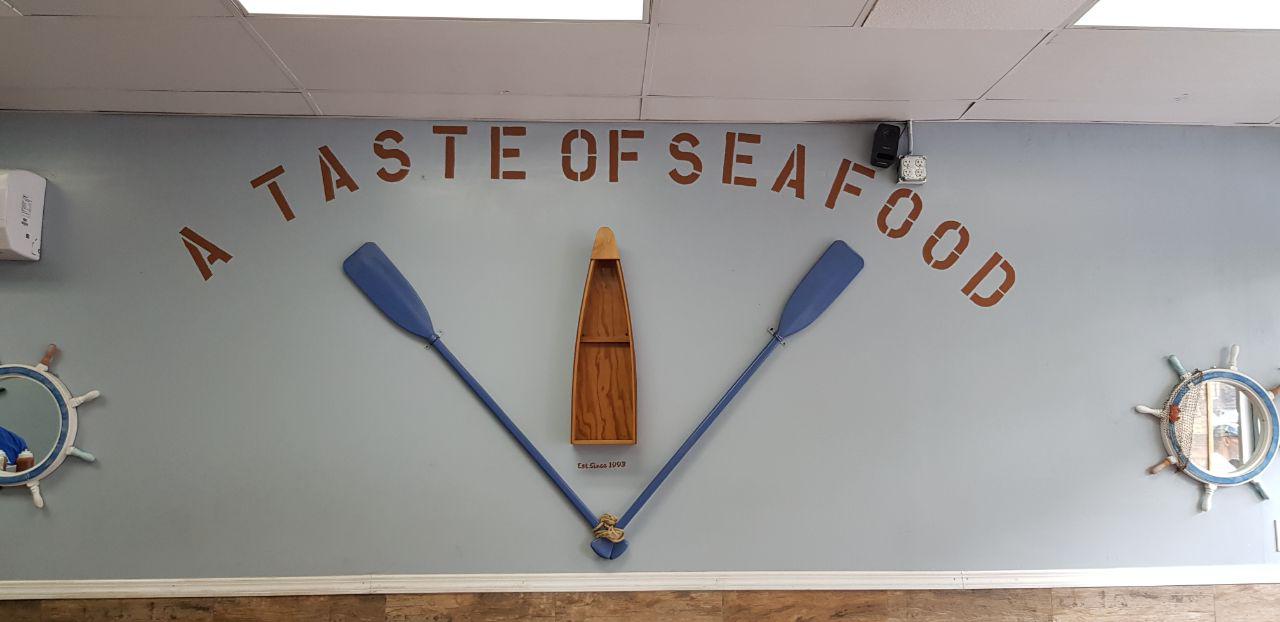
In any case, I was famished and decided to get a double portion of the 2 piece flounder and fries, which amounted to just $12.00! In the meantime, I was discreetly doing some people watching as the other patrons dug into their food, with one boy eyeing me curiously. I took a photo of the side of the eatery as well.

Est. since 1993

After 15 minutes, another African American lady called out my number and she kindly told me that I could put some sauce first at the side of the takeaway box before she helped to pack it up. Thanking her, I squeezed in some tartar sauce at the corner and she professionally helped to pack it up to ensure that nothing would leak out. Although apparently it is not customary to tip for take-outs, I usually like to give at least 10% and since the food was already so cheap, I was more than happy to pass her a few extra dollars for her help, which seemed to make her day too.

Armed with my lunch, I proceeded to walk to the next block to head to the 110th street 6 train station. Along the way, I noticed that a few teenagers were lined up against a fence, with two individuals facing them. I crossed the street to the other side to observe from a distance, and it seemed to be two plainclothes officers interrogating some teenagers, although they were not handcuffed.

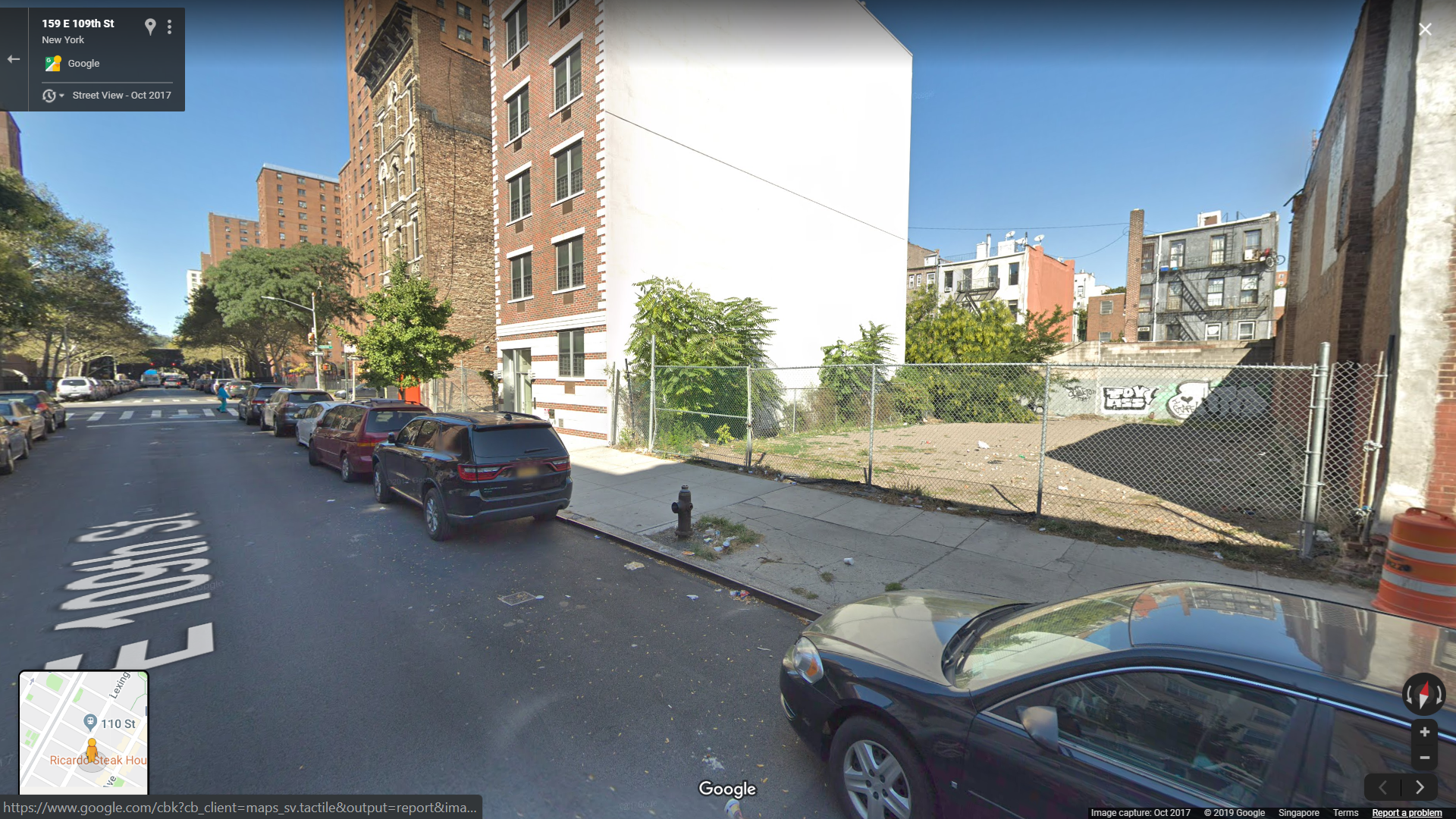
The fence where it happened, along 109th street

I proceeded to turn the corner and quickly saw the uptown 110th street station entrance beside a deli. There was also a towering housing project beside the downtown entrance and I mused about how the area would be like at night.

The 110th street station was featured numerous times in the book above, and the ground used to be littered with broken crack vials and drug dealers on every corner, guarding their turf fiercely. However, I saw nothing like that, although the area did seem a little grittier than the 103rd street station.

I eagerly made my way down to the subway so that I could start feasting on my lunch. Although New York’s subways are known to be rat-infested and filthy, I was just thankful to find a fairly clean spot on a bench to start eating while waiting for my two friends to arrive from downtown.

Four whopping pieces of flounder and decadent fries!

As I started wolfing down my meal, three African American grannies walked by to take up the remaining seats on the bench while eyeing what I was eating, and one of them remarked, “That smells good!”.

For some inexplicable reason, I instantly offered her and her friends to try some, saying it is flounder and be sure to get some sauce on it too. They each grabbed a small piece and dipped it into the sauce and agreed in unison that it tasted great. One of them asked me where did I get it from, and after telling her, she thought for a bit and recalled that she had been there before.

The uptown train soon arrived and we all mutually wished one another a good day; I was still waiting for my two friends to arrive and I was taking my time to savour my lunch.

Reflecting back on that experience now, I cannot imagine doing the same thing in Singapore. Maybe Asians are more guarded and offering a stranger some food from your plate/tray would likely result in a polite decline, which defeats the purpose of offering in the first place. Something to ponder on I guess…

After a few more uptown trains, both friends finally arrived. Arby is a Swiss-Albanian and my closest pal for many of my New York adventures, while Gregor is a towering Austrian dude who has an insatiable appetite and joined us sometimes on our adventures.

We exchanged greetings and waited for the next uptown train that would take us deep into the Bronx, which is New York’s least explored borough due to its reputation for being a rough place. Moreover, the area (Morrisania) we were heading to was in South Bronx, which is probably the most dangerous section of the Bronx.

Most of the Bronx is a sea of red – denoting the second most dangerous areas in NYC. Purple areas are the worst (e.g. Brownsville & East New York)

Despite the area’s fearsome reputation, I convinced the two of them that it would be worth it to head there together after some persuasion; I was definitely glad for the company this time too, as I had only been to the Bronx once before (Fordham) and had no idea how dangerous other sections were.

What exactly was worth the journey all the way to one of the most dangerous sections of New York City? All will be revealed in the next post!

My first foray into East Harlem (Part 2) – 13.10.2018

As I trudged upwards through the dimly lit stairway, a plethora of different paintings adorned the walls.

Stairway leading up to the second floor.
Entrance of the Museum of Trash on the second floor

I stepped in and it took a few moments to sink in at the scale of the entire place. Every inch of the walls were covered in paintings, drawings, posters, adornments of every type one could imagine.

Treasure in the Trash – By Nelson Molina

The picture above does not come close to doing justice of how many more odd objects were spread across the area, I may embed some 360 degree videos of the space in future.

Another OHNY representative ushered me in while I was gawking at the space and checked my registration details. No surprise that no one else was there yet as I was early by around half an hour, hoping to get an unobstructed view of the area.

I asked for the direction to the restroom, which was discreetly behind a narrow passageway. To my delight, it was decorated in a similar fashion as the rest of the space.

This little fella will be judging you if you don’t aim properly.

The tail end of the two videos above were actually restricted areas where the locker rooms were. Initially, I did not know they were out of bounds until someone else came along and was told not to enter. Oops!

Soon, a few more people came along and one of the Department of Sanitation workers gave us a brief overview of how the Museum of Trash came to be. Starting from the 1980s, DSNY worker Nelson Molina started collecting objects he had found during his work of collecting trash on the streets of New York. The second floor of this space was meant to be for storing vehicles but it turned out that the structural support was not strong enough to withstand their weight. Thereafter, the Museum of Trash was born as it became the perfect place to store whatever objects Molina collected on his daily routes.

Nelson Molina giving an interview in 2017. Credit: Inspire More
P.S. Note the metal star he’s holding – I will be highlighting it later.

Molina also took special care in curating the space, and frequently came in to organise his collection to give a curated experience for visitors. The space felt cluttered with stacks of objects strewn around the room and yet, there was a certain order to how everything was displayed. Molina’s collection seems to exemplify the concept of organised chaos well.
We were then given free rein to roam around the space, which was about half the size of a football field. One neon sign quickly caught my eye.

Definitely something most people staying in NY can empathise with.

There were a few other catchy posters that I took photos of on the far end of the space.

Some other short clips of the space below:

I’ll feature the rest of the photos of the Museum of Trash in the next post and talk more about the East Harlem neighbourhood (and its infamous reputation which deters many New Yorkers from visiting).

My first foray into East Harlem (Part 1) – 13.10.2018

East Harlem
Manhattan’s least-known hidden gem

As the subway doors of the 6 train closed at the 96th street station, the final station on the edge of the Upper East Side where the likes of Ivanka Trump reside in, I quickly noted the remaining strap-hangers were either of Latin American or African American descent.

Even so, no one seemed to pay me much attention and it was only a few minutes before I got off at 103rd street station.Not wanting to linger and find my bearings while underground, I hastily picked an exit and soon had my first taste of East Harlem.

Near the station exit of 103rd street and Lexington Avenue

I was headed to a hidden museum in East Harlem, informally known as the Museum of Trash, located in a Department of Sanitation garage on 99th street. This was part of the Open House New York (OHNY) weekend sites, and I was really lucky to secure a reservation, which sold out in mere seconds.

The details of the Museum of Trash on the OHNY website. The exact venue is revealed when you purchase a ticket.

After checking my Google Maps, I quickly made my way over, walking by the George Washington Housing Projects on the way. The morning sun shone brightly, illuminating the dark brick red walls of the nearby dreary-looking project buildings.

Along the way, everyone else seemed to know one another as they were exchanging morning greetings, something of a rarer sight in other parts of Manhattan. Along the way, I stopped to marvel at some murals. After some digging, I managed to find the artist who created these murals and the underlying meanings.

The Second Conquest (2015). EVER for Monument Art Project, PS 109 at 99th Street & Third Avenue

“The second conquest” (east Harlem, NYC) is a piece that reflects reality, future and progress. The three characters describe the American reality, their new skin, new protagonists. Based on photos taken by @marthacoopergram in the 90s of immigrants in East Harlem, the past meets the present on the construction of the neighborhood.

The red flag is the symbolic representation of the fight of Puerto Rican Young Lords during the 60s to improve the living conditions of Puerto Ricans in East Harlem. They also demanded the evacuation of the island of Vieques occupied by the US Army, but above all, demanded the independence of Puerto Rico.

Source: Buenos Aires-artist EVER aka Nicolas Romero
https://eversiempre.com/the-second-conquest-east-harlem-nyc-2015/
On 99th Street, just west of Second Avenue, on the east side wall of PS 109

The Young Lords New York were a revolutionary group of Puerto Rican activists inspired by the Black Panthers, who organized for social justice in El Barrio in the late 1960s to the early 1970s. They organized around issues of political liberation and core community concerns such as health, food, education and housing. The image above is entitled March to Free the Panther 21 taken by Hiram Maristany in 1969. It has been installed on the side of PS 109 (215 East 99th Street), an abandoned school transformed into an affordable housing complex of live/work space for local artists.

Source: https://latinx.wordpress.com/category/photography/

As I neared the destination, the exterior was a dilapidated garage with no exterior signs indicating where to enter.

Google street view of the exterior – pretty accurate depiction of what I saw at the time. Credit: Google Maps

Luckily, an OHNY representative soon stepped out and told me to head upstairs. I walked in to find the first floor full of Department of Sanitation New York vehicles, with a dimly lit stairwell leading upwards. There were already some signs of what was to come, but I was unprepared for the extent of trinkets that were being stored upstairs.

Stairway on the left, heading to the Museum of Trash. They might be running out of space upstairs soon.

To be continued with more photos in the next part!

Design a site like this with WordPress.com
Get started